Trump, Putin and Xi: What to Expect From the Summit
Trump, Putin and Xi: What to Expect From the Reported Trilateral Summit
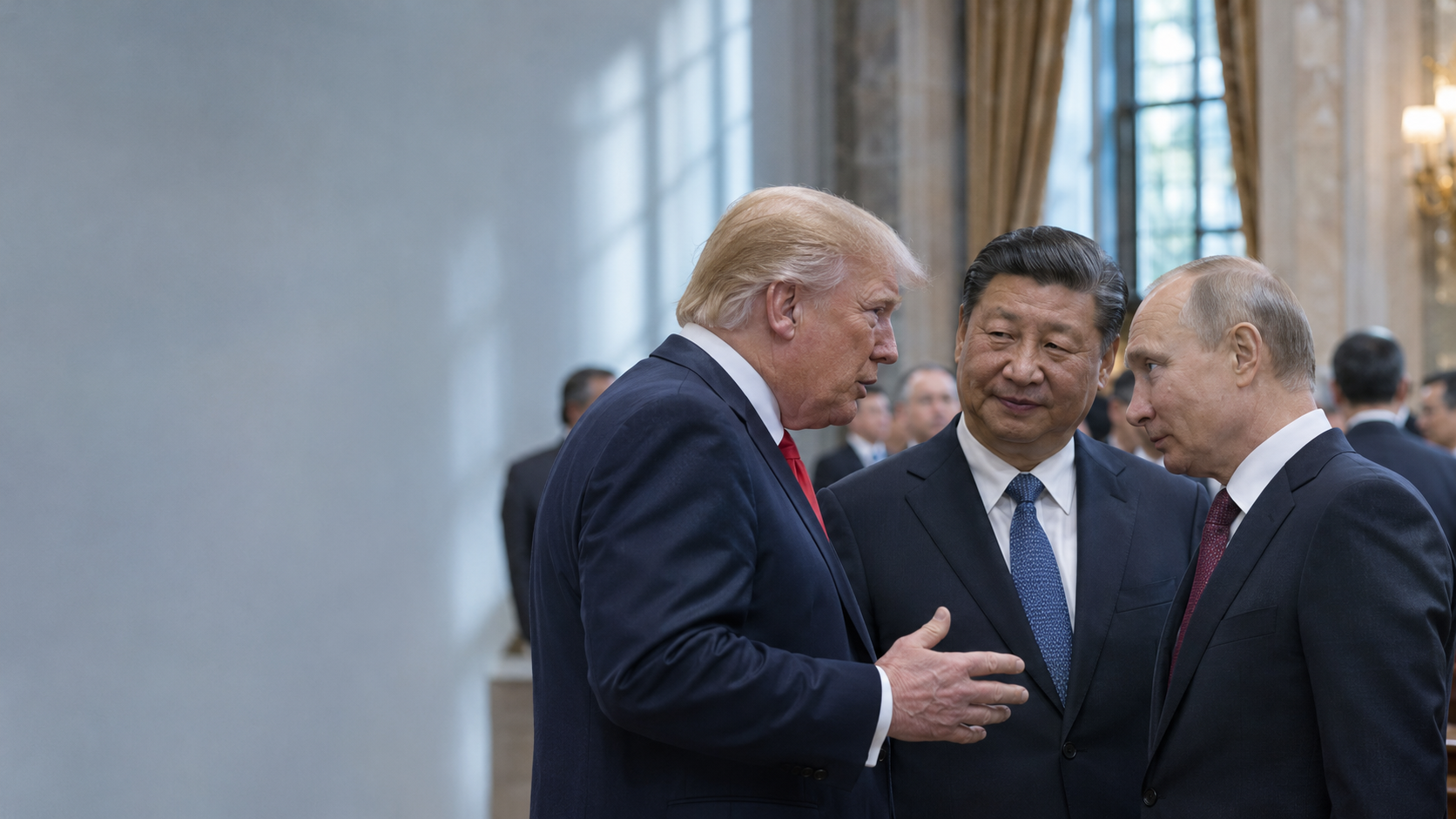
Donald Trump is expected to hold his first trilateral meeting with Russian President Vladimir Putin and Chinese President Xi Jinping. The reported summit would bring the leaders of the United States, Russia and China together for a three-way presidential discussion.
The meeting would matter because the three countries possess enormous military, economic, diplomatic and nuclear influence. Direct talks could affect nuclear security, strategic competition, crisis communication and the future of global diplomacy.
Several reports identify China as the likely host. ABC News reportedly cited U.S. officials who said Trump would meet Putin and Xi there the following week (Source 7). The New York Post described the event as a historic meeting focused on nuclear arms control in a report dated November 14, 2026 (Source 5).
However, the available reports do not confirm the date, city, venue, format or final agenda. The event should therefore be described as expected or reported, rather than as a fully confirmed summit.
What Is Known About the Meeting
The expected participants are:
- Donald Trump, president of the United States
- Vladimir Putin, president of Russia
- Xi Jinping, president of China
The Washington Post reported that Trump was set to hold his first trilateral meeting with Putin and Xi (Source 1). Unlike separate bilateral meetings, a trilateral summit would place all three leaders in the same discussion. That could address shared concerns, but it could also expose disagreements that are less visible in two-country talks.
Unconfirmed Details
- Exact date
- Host city and venue
- Formal summit or side meeting format
- Meeting length
- Participating ministers and advisers
- Joint statement or other formal outcome
- Separate bilateral meetings
Nuclear Arms Control Could Be Central
Nuclear arms control is the main subject identified in the available reporting (Source 5). The supplied reports do not identify specific proposals or a draft agreement.
Possible topics include:
- Nuclear arsenal limits
- Strategic weapons transparency
- Missile testing and deployment
- Early-warning systems
- Nuclear doctrine
- Crisis communication
- Verification and inspections
- Measures to reduce accidental escalation
A three-power negotiation would be difficult. The United States, Russia and China have different arsenal sizes, military doctrines, security concerns and approaches to transparency. They also disagree over missile defense, advanced conventional weapons, space systems and regional military activity.
Verification would present another challenge. Any binding agreement would require reliable methods for monitoring compliance, exchanging information, conducting inspections and addressing suspected violations.
A first meeting may therefore focus on principles and communication channels rather than a binding treaty. Potential outcomes include a commitment to continue strategic-stability talks, new or restored military hotlines, working groups on nuclear risk, shared language against accidental escalation or a timetable for future negotiations.
The key measure would be follow-up. A general declaration would have limited impact without named negotiators, technical discussions and a clear schedule.
Ukraine May Not Be on the Formal Agenda
The Kyiv Independent reported that the White House said the summit would not focus on Ukraine (Source 9). That describes the administration’s stated formal position, but it does not establish that Ukraine-related issues will be absent from every conversation connected to the event.
Russia’s war in Ukraine remains central to U.S.-Russia relations. Questions about sanctions, military assistance, ceasefire diplomacy, territorial claims and European security could arise in private discussions or separate bilateral meetings. Xi could also face questions about China’s diplomatic and economic relationship with Russia.
Avoiding Ukraine could keep the summit focused on nuclear security. It could also signal that the leaders intend to limit the conflict’s role in a broader conversation about international security.
Strategic Interests of the Three Leaders
Donald Trump
Trump could use the meeting to demonstrate that direct presidential diplomacy can address major security issues. Likely objectives may include exploring nuclear talks, maintaining communication with Moscow and Beijing, presenting the United States as a central negotiating power and establishing a process for future discussions.
The available reports do not provide a confirmed list of Trump’s objectives or a policy document supporting a specific negotiating position.
Vladimir Putin
Putin could seek direct access to the U.S. president and use the meeting to present Russia as an indispensable global power. Moscow may want recognition of its strategic status, broader security discussions and reduced diplomatic isolation. Putin could also seek to separate nuclear issues from disputes involving Ukraine and other conflicts.
Xi Jinping
Xi would host an event demonstrating China’s importance in global security diplomacy. Beijing may seek to shape the nuclear-risk debate, prevent a U.S.-Russia arrangement that sidelines China, preserve its relationship with Moscow and avoid appearing formally aligned with either Washington or Russia.
Hosting the meeting could increase China’s influence, but it could also place Beijing under pressure from both sides. China would need to manage disagreements over nuclear transparency, arms limits, Ukraine and broader security rules while controlling the event’s agenda and public messaging.
Possible Geopolitical Implications
U.S.-Russia Relations
The meeting could reopen strategic dialogue and reduce the risk of miscalculation if it leads to working-level negotiations. Without concrete mechanisms, however, it could remain symbolic and leave underlying disputes unchanged.
U.S.-China Relations
Xi’s participation would add a new layer to tensions over trade, technology, military activity and regional security. The summit could provide a rare setting for direct communication between Trump and Xi, but its value would be limited if it became a platform for competing public accusations.
Russia-China Relations
Russia and China could present coordinated positions on some issues, but their interests are not identical. The meeting might expose differences over nuclear policy, economic relations and ties with Washington. Putin may seek stronger Chinese support, while Xi may avoid commitments that increase tensions with the United States.
Global Security
Nuclear dialogue among the three powers would affect strategic stability worldwide. Other nuclear-armed states and U.S. allies would watch for changes in deterrence policy, weapons development and crisis communication.
A failed summit could deepen uncertainty. A successful summit would still require follow-up negotiations, technical work and verification before producing lasting security benefits.
What to Watch
The strongest indicators of substantive progress would include:
- A joint statement with specific commitments
- Formal working groups
- Military hotlines or crisis-communication agreements
- A plan for arms-control negotiations
- Named negotiators
- A timetable for follow-up talks
- Participation by senior defense and foreign-policy officials
The meeting may be primarily symbolic if it produces only general statements, no follow-up dates, no named negotiators, conflicting accounts or no new communications mechanisms.
Reactions from Ukraine, European governments, NATO and other U.S. allies will also show how the event is interpreted. Their responses could reveal concerns about decisions made without them or support for renewed strategic dialogue.
Limits of the Available Reporting
The supplied reports establish the concept of a Trump-Putin-Xi meeting but do not confirm every detail. Additional confirmation is required for the date, venue, final agenda, participants, joint statement and any agreement.
The supplied Diplomat entry, titled “For China, Two’s Company and Three’s a Risk,” includes only its headline and does not provide enough content to assess the article’s full argument (Source 3). Unrelated entries containing labels such as “100+,” “200+,” “ebenezer,” “one championship rodtang,” “prajogo pangestu,” “luis gurule” and “jepang vs brasil” provide no verifiable information about the summit.
Conclusion
Trump’s expected meeting with Putin and Xi would be a major diplomatic event. Reports identify China as the likely host, nuclear arms control as a possible central topic and Ukraine as outside the formal agenda.
The meeting’s importance will depend less on ceremony than on what follows. A joint statement, working groups, military hotlines and scheduled negotiations would suggest substantive progress. Broad language without follow-up would indicate a primarily symbolic encounter.
The central test is whether the summit creates a durable process for nuclear and strategic dialogue or remains a display of great-power diplomacy without lasting policy results.
Frequently Asked Questions
When will Trump meet Putin and Xi?
The supplied reports do not establish a confirmed date. ABC News reportedly cited U.S. officials who expected the meeting to take place in China the following week (Source 7). The final schedule requires official confirmation.
Where is the meeting expected to take place?
Reports identify China as the expected location, but the supplied summaries do not name a city or venue.
What will the leaders discuss?
Nuclear arms control is the main topic identified in the available reporting. Other strategic and security issues could arise, but the final agenda has not been fully confirmed.
Will Ukraine be discussed?
The White House reportedly said the summit would not focus on Ukraine (Source 9). Ukraine could still arise in informal discussions or separate bilateral meetings.
Why is the meeting significant?
It would bring the leaders of the United States, Russia and China together for their first reported trilateral meeting. The three countries are major military and nuclear powers, making any discussion of strategic stability globally significant.
Could the summit produce a nuclear arms-control agreement?
The available reports do not indicate that an agreement has been drafted. A first meeting may establish dialogue, working groups or future negotiations rather than produce a binding treaty.