SpaceX Launches Starlink Satellites from California
SpaceX Launches Starlink Satellites from California as Falcon 9 Cadence Slows
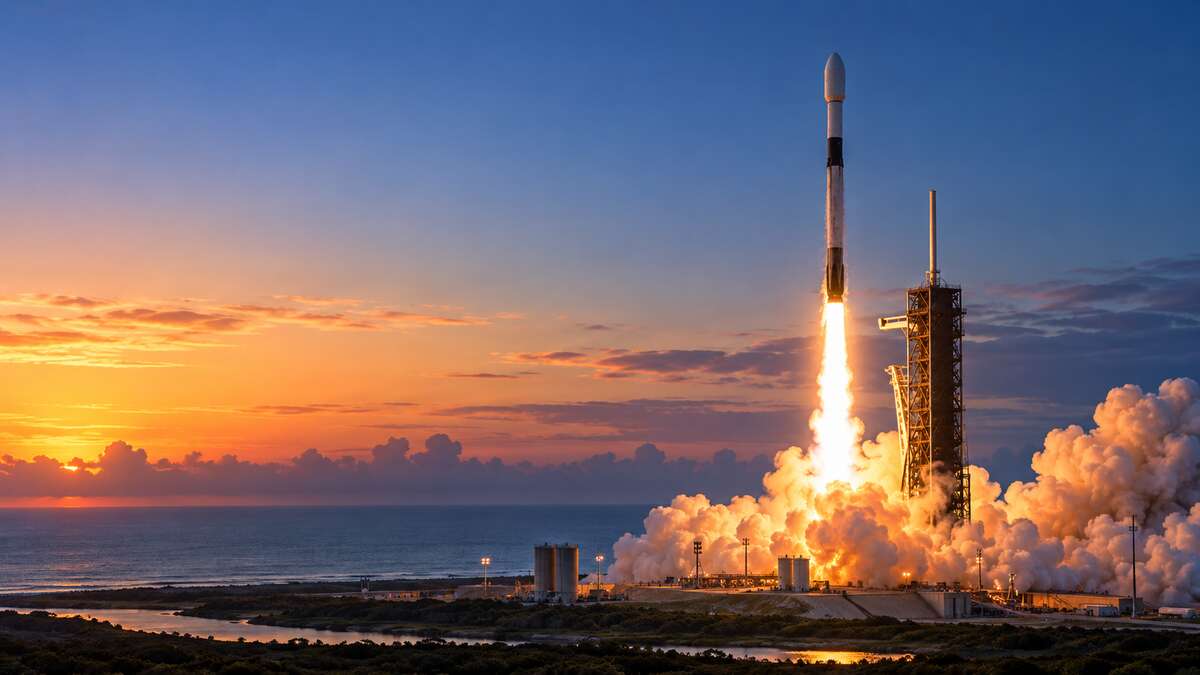
SpaceX continues expanding its Starlink internet network while reports point to a slower rhythm for Falcon 9 launches. The company recently launched Starlink satellites from California aboard a Falcon 9, with photos and video documenting the mission Source 1.
The launch illustrates two trends within SpaceX’s orbital program. Starlink requires repeated missions to deploy, replace, and expand its satellite fleet. At the same time, KeepTrack reported a slower Falcon 9 launch cadence while booster B1063 completed its 15th flight Source 3.
A single Starlink launch confirms continued deployment but does not establish the long-term health of the launch schedule. Exact details, including the satellite count, launch time, launch complex, booster identity, and landing result, should be verified through official mission records before publication.
California Falcon 9 Launch at a Glance
Available reports identify the mission as a SpaceX Starlink launch from California using a Falcon 9. Another report described a Starlink mission as SpaceX’s 90th Falcon 9 flight of the year and included video coverage Source 7. These reports provide context but do not constitute a complete official mission record.
| Category | Confirmed or attributed information |
|---|---|
| Mission | Starlink satellite deployment |
| Rocket | Falcon 9 |
| Launch site | California |
| Operator | SpaceX |
| Coverage | Photos and video reported |
| Broader context | Reports describe a slower Falcon 9 cadence |
The available summaries do not confirm the satellite count, launch time, precise launch complex, first-stage designation, or landing outcome. Check SpaceX announcements, U.S. Space Force records, Federal Aviation Administration documentation, or a reliable launch database for those details.
What the Launch Images Show
Photos and video provide a visual record of the mission. A useful gallery should present the sequence chronologically, from the Falcon 9 on the pad through liftoff, ascent, and any clearly documented later events.
Captions should describe visible facts rather than infer details from appearance. A plume, distant coastline, or partially visible stage does not prove a precise location or mission event. Exact times, booster numbers, and landing sites require independent confirmation.
Recommended captions include:
- A SpaceX Falcon 9 lifts off from California with a Starlink payload.
- The Falcon 9 climbs during the Starlink deployment mission.
- Launch coverage captures the rocket’s ascent after liftoff.
- SpaceX documents another Falcon 9 mission supporting the Starlink network.
Descriptive image filenames include spacex-starlink-falcon-9-california-launch.jpg and falcon-9-starlink-liftoff-california.jpg. Recommended alt text: “SpaceX Falcon 9 carrying Starlink satellites launches from California.” Credit every image and identify its licensing terms. WebP or AVIF can reduce page weight when compression preserves the rocket, flame, and major mission details.
Why SpaceX Launches Starlink Satellites from California
California is an important part of SpaceX’s launch network. West Coast facilities provide access to flight corridors over the Pacific and support missions requiring trajectories compatible with local range and regulatory conditions. Some polar or near-polar missions can launch from the West Coast when authorized, although the specific trajectory for this mission has not been confirmed.
California also provides geographic separation from SpaceX’s Florida operations. The company uses multiple launch locations to distribute missions across different ranges, processing facilities, and schedules. The final site depends on trajectory, payload readiness, vehicle processing, weather, range availability, airspace and maritime closures, regulatory approval, and mission priorities.
A distributed launch network improves scheduling flexibility but does not eliminate delays. Each site has its own ground systems, safety requirements, weather limits, and coordination demands.
What the Mission Means for Starlink
Starlink depends on recurring launches because the constellation is a large and changing system. New satellites can add capacity, expand coverage, replace spacecraft reaching the end of their service lives, or compensate for satellites that fail before completing their planned missions.
The general operational cycle includes:
- Satellite production and payload preparation.
- Falcon 9 integration.
- Launch and ascent.
- Deployment into orbit.
- Orbit-raising and satellite checks.
- Network integration and entry into operational service.
Satellites do not necessarily provide full consumer service immediately after deployment. Orbital position, propulsion operations, communications checks, software configuration, and network integration affect when they become active.
A slower cadence does not automatically indicate a failure in the Starlink program. Launch frequency can change because of vehicle processing, payload availability, weather, range scheduling, regulatory reviews, engineering work, maintenance, or mission priorities. The available reports describe a trend but do not establish its cause.
Falcon 9 Reuse and Booster B1063
Falcon 9’s reusable first stage is central to SpaceX’s launch model. After separating from the upper stage, the booster performs controlled maneuvers, uses its engines for landing, and returns for inspection and refurbishment.
KeepTrack reported that booster B1063 completed its 15th flight while discussing a slower Falcon 9 cadence Source 3. The milestone illustrates repeated booster reuse across the Falcon 9 fleet.
The available summaries do not confirm that B1063 flew the California Starlink mission. Its reported flight count must remain separate from this launch unless an authoritative mission record links the two.
A 15th flight demonstrates that reusability can extend well beyond a single recovery, but flight count alone does not measure a booster’s complete condition. Mission profiles, landing environments, inspection findings, refurbishment work, engine history, and the requirements of the next payload all influence launch planning.
Why Falcon 9 Cadence May Be Slowing
“Slowing cadence” can describe fewer launches during a defined period, longer intervals between missions, a temporary schedule change, or a different mix of Starlink, commercial, government, and NASA flights. It may also affect one launch site without reflecting the entire Falcon 9 program.
Weather, upper-level winds, payload readiness, range availability, airspace restrictions, maritime closures, launch-site processing, booster inspections, refurbishment, and regulatory reviews can all extend the interval between missions. Technical investigations or launch aborts may create additional delays, although the available reports do not identify a specific cause.
Cadence should be measured using consistent rules, such as launches per month, launches per quarter, average days between launches, Starlink launches compared with non-Starlink missions, and total Falcon 9 launches compared with successful orbital missions. The measurement period must be stated because a short pause may reflect scheduling rather than a sustained reduction in capability.
Launch Abort Context
A separate report said SpaceX aborted a rocket launch at the last second for the second consecutive attempt Source 9. That report should remain separate from the California Starlink launch unless mission records identify them as the same event.
A late countdown abort can result from vehicle readings, weather, range conditions, ground-system checks, propulsion data, or software signals. A scrub stops the countdown before liftoff; a failure occurs after launch when the vehicle or payload does not complete its objective. An abort may delay a mission, but it can also prevent a more serious incident.
Broader Launch Schedule
SpaceX’s manifest includes commercial satellites, NASA spacecraft, U.S. government payloads, and U.S. Space Force missions in addition to Starlink. A separate report described a classified Space Force mission and included video coverage Source 5.
That mission should not be merged with the California Starlink launch. The reported October 15, 2026 publication date is source metadata and requires verification before use. A mixed manifest can make Starlink cadence appear slower even when total SpaceX launch activity remains substantial.
Key Takeaways
- SpaceX launched Starlink satellites from California aboard a Falcon 9, with photos and video documenting the mission Source 1.
- Starlink requires recurring launches to build, maintain, and expand its network.
- Falcon 9 reuse remains central to SpaceX’s operating model.
- B1063’s reported 15th flight demonstrates repeated booster use but does not link the booster to this mission Source 3.
- Reports describe a slower Falcon 9 cadence, but its duration, cause, and significance require consistent launch data.
- Exact mission details should be verified through official records.
Frequently Asked Questions
How many Starlink satellites did SpaceX launch from California?
The available summaries confirm a Starlink launch from California but do not provide a verified satellite count. Check an official mission announcement, launch database, or regulatory record before adding one.
Which rocket launched the Starlink satellites?
A Falcon 9 launched the Starlink payload. The first-stage booster should not be identified unless an authoritative mission record confirms its designation.
What does a slower Falcon 9 cadence mean?
It means that the number of Falcon 9 launches or the interval between them changed during a defined period. A short-term slowdown does not automatically indicate a permanent reduction or a problem with Starlink.
Why does SpaceX launch Starlink missions from California?
California offers established launch infrastructure and access to suitable flight corridors for certain missions. The final decision depends on trajectory, range availability, payload requirements, weather, regulatory approval, and vehicle processing.
Where can readers view launch photos and video?
Readers can use the materials attached to the originating launch report Source 1. Official SpaceX media, webcast footage, and properly licensed images can supplement the gallery. Every image requires accurate credit, licensing information, and a caption matching the footage.