Riots in France: What Is Confirmed
Riots in France: What Is Confirmed
Last updated: Based on the supplied source material
Primary keyword: riots in France
Reports describe serious unrest in France involving students, workers, and yellow vest activists. However, the supplied summaries do not verify the protest date, immediate trigger, locations, casualty figures, arrest totals, or the government’s full response.
That distinction matters. A headline may indicate that protests occurred, but it cannot independently establish their scale, the extent of violence, or whether separate demonstrations formed one coordinated movement.
The safest conclusion is that France experienced, or was reported to be experiencing, significant demonstrations involving several social groups. Further publication requires confirmation from French authorities, local reporters, unions, student organizations, and multiple independent news outlets.
What Is Confirmed?
The supplied material points to four overlapping forms of unrest:
- Street demonstrations involving students, workers, and yellow vest activists
- Student or school-related protests
- Fires, clashes, and rioting reported in some locations
- Broader opposition to the French government and President Emmanuel Macron
CBC describes “fiery street protests” involving students, workers, and yellow vest activists Source 5. The Guardian summary refers to student protests, fires, public anger, and hundreds of arrests Source 9. CNBC characterizes the unrest as a violent revolt in French classrooms [Source 7](https://news.google.com/rss/articles/CBMifEFVX3lxTE0y c1pOSDRhVWEzd2hyNlVrUHNza21qNC1WYWY1T2Njb3J4RTJBZlZZZjFMZU5MTVJRcC1heE05Y250MktRX193UE9FdGpoU2JLSXJ5dlhuaEZMZm1TR3QzVTZCZDVoWDk2WXluZ1JzS2RJX1FZc1N0bDQwVnU?oc=5).
These summaries do not establish whether “classrooms” means classroom violence, school occupations, campus demonstrations, or headline language describing youth unrest. Direct reporting is required.
Timeline and Trigger
No reliable timeline can be constructed from the supplied material. The sources do not establish:
- When the protests began
- What triggered them
- Which city was first affected
- When major escalations occurred
- When Macron reportedly attended a concert
- When arrests, injuries, or property damage were recorded
The immediate trigger also remains unconfirmed. Possible explanations include a government policy, police action, court decision, education dispute, or political announcement, but none can be stated as fact based on the supplied summaries.
The New York Times source is described as examining the trigger, scale, and significance of the unrest Source 1. Its headline-level summary is insufficient to identify the event without the full report.
Longer-term sources of unrest may include rising living costs, economic insecurity, distrust of political institutions, opposition to government reforms, concerns about policing, frustration with public services, and disputes over immigration and national identity. These are possible background conditions, not confirmed causes of this specific unrest.
Who Is Participating?
Students and young demonstrators
Student involvement appears central to the available coverage. The Guardian describes student protests involving fires and hundreds of arrests Source 9. CNBC similarly emphasizes unrest involving French classrooms [Source 7](https://news.google.com/rss/articles/CBMifEFVX3lxTE0y c1pOSDRhVWEzd2hyNlVrUHNza21qNC1WYWY1T2Njb3J4RTJBZlZZZjFMZU5MTVJRcC1heE05Y250MktRX193UE9FdGpoU2JLSXJ5dlhuaEZMZm1TR3QzVTZCZDVoWDk2WXluZ1JzS2RJX1FZc1N0bDQwVnU?oc=5).
The available information does not identify the number of schools or universities involved, whether campuses were occupied, the number of injured students, student demands, or whether classes were suspended. It also does not confirm that violence occurred inside classrooms.
Workers and labor groups
CBC reports that workers participated alongside students and yellow vest activists Source 5.
The summary does not identify participating unions or industries. Workers may join through strikes, marches, workplace walkouts, road blockades, or spontaneous gatherings. Each form has a different economic and political effect. The scale requires confirmation from unions, transport operators, schools, employers, and local authorities.
Yellow vest activists
The yellow vest movement became a major force after protests over fuel taxes and living costs. It also expressed anger about political representation, regional inequality, and the distance between national institutions and ordinary households.
Current demonstrations should not automatically be called a renewed yellow vest movement. The CBC summary identifies yellow vest activists among the participants but does not establish whether recognized organizations formally endorsed the protests Source 5. Shared participants, tactics, symbols, or grievances do not prove that the movements are identical.
How Large and Violent Were the Protests?
The supplied material does not provide a reliable nationwide crowd estimate or a confirmed breakdown by city and date.
The Guardian summary mentions “hundreds of arrests” Source 9, but it does not specify the number, location, date, or whether the figure refers to arrests, detentions, or formal charges.
These categories differ:
- Arrest: Police take a person into custody.
- Detention: A person is held for questioning or investigation.
- Charge: Prosecutors formally accuse a person of an offense.
- Conviction: A court finds a person guilty.
The supplied material does not confirm deaths, injuries, police casualties, building damage, vehicle damage, or the number of fires. Those figures require dated official statements or reputable reporting.
A balanced account should distinguish peaceful demonstrations from vandalism, arson, attacks on public buildings, road blockades, and clashes with police. It should also present conflicting accounts when police and protesters describe events differently.
Emmanuel Macron’s Response
Fox News reported criticism of Emmanuel Macron for attending a concert while riots escalated Source 3.
The supplied summary does not confirm the concert’s date, location, Macron’s exact schedule, or the government’s explanation. Attendance alone does not prove that Macron ignored the crisis or caused the unrest. A fair report must establish the timeline and include both criticism and the official response.
Government Measures and Political Significance
The supplied summaries do not provide a reliable account of policing measures. Authorities may have deployed riot police, additional national police units, barriers, security zones, curfews, gathering restrictions, tear gas, water cannons, mass arrests, school closures, or transport restrictions. Each claim requires verification.
The protests could affect Macron’s approval ratings, coalition management, and legislative agenda. Their impact depends on whether they remain localized, expand nationally, receive sustained union support, or develop clear demands.
Opposition parties may call for negotiations, policy concessions, tougher policing, government resignation, parliamentary action, or new elections. Political support does not prove that a party coordinated the protests. The actions of a small violent group should not be attributed to every demonstrator.
France has a long history of strikes and mass demonstrations. Large protests do not automatically indicate institutional collapse. The central question is whether institutions can address public anger through elections, courts, negotiations, and policy changes without allowing violence or repression to dominate the response.
Comparisons With Earlier Protests
The current unrest may overlap with earlier yellow vest, pension, labor, or student protests through shared grievances involving purchasing power, political representation, and inequality. Important differences may include the immediate trigger, union participation, organization, and geographic distribution.
The current demonstrations should be compared with earlier movements only after their demands and structure are confirmed. The phrase “violent revolt in French classrooms” should not be treated as a factual description unless reporting confirms violence inside classrooms.
What Happens Next?
The government may:
- Negotiate with unions, students, and community representatives.
- Offer policy concessions or financial relief.
- Investigate police conduct.
- Increase police deployments or restrict gatherings.
- Seek parliamentary approval for new measures.
- Wait for participation to decline.
Escalation risks include serious injuries, deaths, prominent activist arrests, controversial new policies, allegations of police misconduct, school closures, and coordinated national strikes. Signs of declining momentum may include smaller crowds, fewer violent incidents, restored transport, resumed classes, reduced union involvement, and formal negotiations.
How to Follow Reliable Updates
Readers should compare statements from the French Interior Ministry, local prefectures, police authorities, unions, student organizations, schools, universities, courts, prosecutors, and multiple reputable news organizations.
Crowd estimates should be compared among police, organizers, and independent observers. Arrest figures should be labeled by category and date. Videos should be checked for original upload dates, location clues, weather, signs, uniforms, and reverse-image matches.
Old footage, unrelated demonstrations, misleading captions, and unverified casualty claims often circulate during fast-moving unrest.
Conclusion
The available material indicates serious protests involving students, workers, and yellow vest activists. It also reports fires, violence, public anger, and arrests. However, it does not establish the exact trigger, date, locations, casualty figures, or nationwide scale.
The protests should not be treated as one unified movement without evidence of common organization and demands. Peaceful demonstrators, students, workers, political activists, and violent groups may appear in the same news cycle while pursuing different goals.
Macron faces a political challenge involving public order, economic pressure, institutional trust, and the government’s ability to respond without deepening opposition. The decisive issue is whether authorities can restore safety while addressing the grievances that brought people into the streets.
Frequently Asked Questions
What caused the riots and anti-government protests in France?
The supplied sources do not identify a verified immediate trigger. They describe student, worker, and yellow vest involvement, along with fires, arrests, and public anger. Possible long-term factors include economic insecurity, distrust of political institutions, opposition to government policies, and concerns about policing.
Who is participating in the protests?
The available summaries mention students, workers, and yellow vest activists. Participation may vary by city and event. No evidence shows that every group shares the same demands or belongs to one organization.
How many people have been arrested or injured?
The Guardian summary refers to hundreds of arrests Source 9. The supplied material does not provide a precise total or verified injury figures. Arrests, detentions, charges, and convictions are not interchangeable.
What role did Emmanuel Macron play during the unrest?
A Fox News summary says Macron faced criticism for attending a concert while riots escalated Source 3. The date, location, schedule, and government explanation remain unconfirmed.
Are the protests connected to the yellow vest movement?
The CBC summary identifies yellow vest activists among the participants Source 5. This suggests some overlap but does not prove that established yellow vest organizations formally endorsed the demonstrations or that the current protests are identical to the earlier movement.
What could happen next in France?
The government could negotiate, offer concessions, investigate police conduct, increase policing, restrict gatherings, or wait for participation to decline. The outcome depends on whether protests expand, unions call national action, schools remain disrupted, or demonstrators and officials begin formal talks.
Artikel Terkait
-
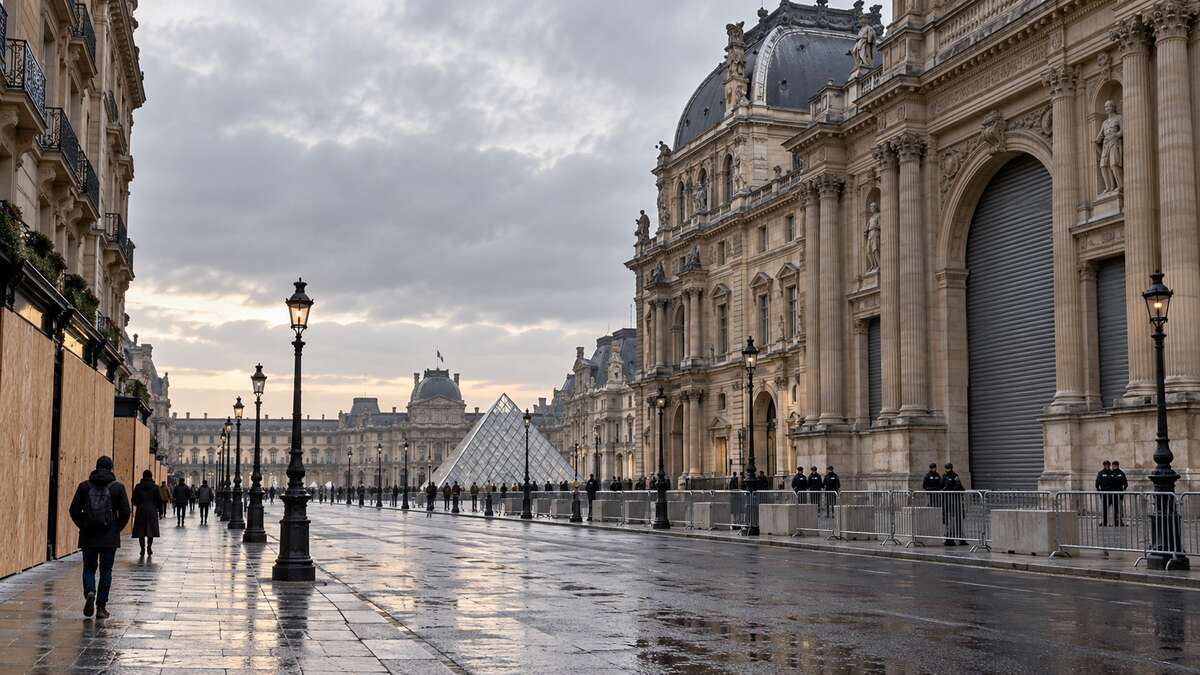 Paris Museums Close as Protests Prompt Security Measures
-
 How Netanyahu Reshaped Israel’s Institutions
-
 Eagle’s Nest Fire: What We Know About the Historic Site
-
 Iran Reportedly Intensifies Efforts to Target Americans Abroad
-
 Melania Trump Reportedly Brokers Oleshky Ceasefire
-
 US Asked Musk to Alter Starlink Service, Sources Say