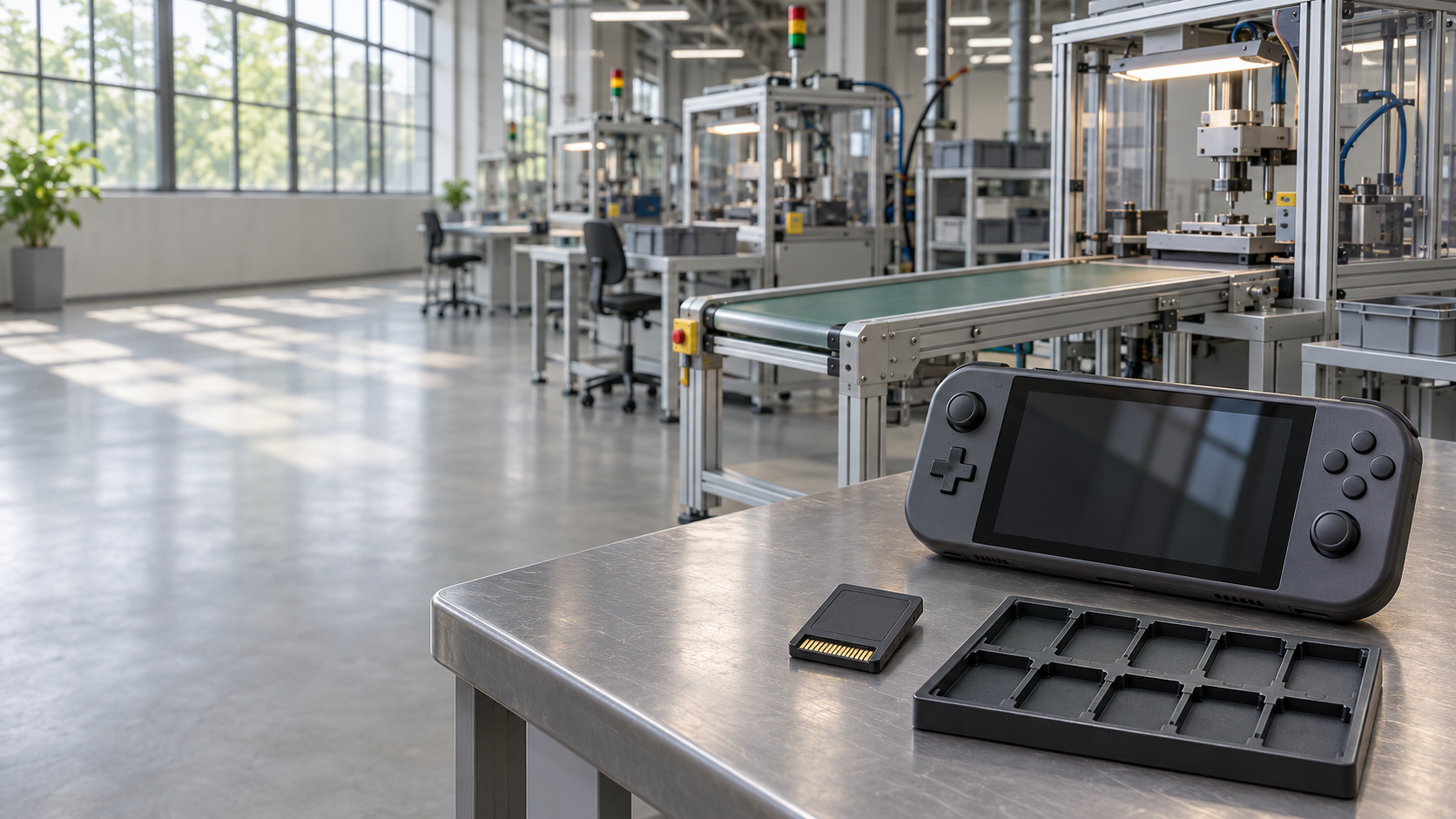
Nintendo Cartridges Face Pressure From Memory Shortage
Nintendo Cartridges Face Pressure From the Global Memory Shortage
Nintendo’s physical game business may face higher costs and more complicated production planning as a global memory shortage spreads across the technology industry.
Artificial intelligence infrastructure is absorbing substantial semiconductor capacity. Memory suppliers are prioritizing products used in data centers, servers, and advanced computing, while consumer-electronics companies face higher prices and tighter allocations. Reuters reports that Nintendo and Sony are already dealing with sharply higher memory costs as the artificial intelligence boom strains global supply Source 1.
The immediate issue is not a confirmed, universal shortage of Nintendo cartridges. Current reporting instead points to supply-chain risk: higher component prices, reduced manufacturing allocations, longer lead times, and less predictable restocking.
For players, the potential effects include higher prices, fewer launch copies, delayed restocks, and more releases that combine a physical package with a download code. The outcome will depend on memory prices, supplier capacity, Nintendo’s contracts, cartridge specifications, and the balance between physical and digital sales.
Why the Memory Shortage Is Worsening
Artificial intelligence is absorbing capacity
Artificial intelligence systems require substantial memory resources. Data centers use high-bandwidth memory with advanced processors, large quantities of server DRAM, and extensive storage infrastructure.
These products are not identical to the flash and ROM components used in game cartridges, but they are part of a connected semiconductor supply chain. Memory manufacturers must allocate fabrication capacity, packaging resources, testing equipment, logistics, and engineering attention across multiple product categories.
When demand for premium components rises quickly, suppliers may prioritize products with stronger margins and faster growth. Reuters identifies the artificial intelligence boom as a factor behind sharply higher memory costs affecting Nintendo and Sony’s gaming businesses Source 1.
Suppliers prioritize higher-value products
Not every memory product can replace another. High-bandwidth memory for AI accelerators differs technically from console RAM, flash storage, and cartridge memory. A shortage in one category does not automatically eliminate supply from every other category.
Pressure can still spread indirectly. Semiconductor companies operate complex production networks in which products compete for wafer capacity, packaging, testing, equipment, labor, and transportation. Suppliers may also reduce investment in older or lower-margin product lines when advanced components offer better returns.
Early warning signs include:
- Higher component prices.
- Longer manufacturing lead times.
- Smaller allocation volumes.
- More conservative production forecasts.
- Delayed launches or replenishment.
- Greater pressure to redesign products.
A physical Nintendo game can remain available while becoming more expensive or harder to restock. One sellout does not prove a global shortage, but repeated allocation problems across multiple releases would indicate deeper supply pressure.
How Nintendo’s Cartridge Supply Chain Works
Cartridges require specialized memory
A Nintendo game cartridge is a compact storage product that holds game data and supporting electronics. Manufacturing costs depend partly on storage capacity. A title that requires more space may need a higher-capacity cartridge, increasing the cost of each physical copy.
Cartridge memory is not the same as the high-bandwidth memory used in AI servers or the DRAM used as working memory in a console. The connection is the broader semiconductor market, where manufacturers, packaging providers, logistics companies, and component suppliers operate within a constrained industrial ecosystem.
A publisher may choose a smaller cartridge and require players to download additional data. It may use a larger, more expensive card, compress the game, or release a physical edition only after securing adequate production capacity.
Nintendo relies on external suppliers
Nintendo designs its platforms and publishes games, but it does not manufacture every semiconductor, storage component, or physical product internally. The company therefore depends on external suppliers and contract manufacturers.
Tedium’s analysis of Apple describes a similar structural issue: major technology companies rely on external memory suppliers and cannot fully control every component in their products Source 2.
This comparison does not establish that Apple and Nintendo use the same suppliers or components. It illustrates how dependence on specialized vendors can expose hardware companies to price changes, shortages, and production constraints.
Physical releases require advance planning
A physical game release involves more than duplicating game data. Publishers must arrange:
- Component procurement.
- Manufacturing capacity.
- Data duplication.
- Quality testing.
- Packaging.
- Global shipping.
- Regional retail allocation.
These decisions often occur weeks or months before launch. Publishers cannot always respond immediately to a sudden increase in demand because additional cartridges require available components, factory slots, packaging, transportation, and retailer orders.
Digital distribution avoids the need to manufacture one physical storage medium for every sale. That difference makes physical releases more exposed to component shortages and logistics disruptions.
What the Shortage Could Mean for Nintendo
Higher cartridge production costs
If suitable memory components become more expensive, the cost of producing physical games may rise. Nintendo and other publishers could:
- Increase wholesale or retail prices.
- Accept lower margins.
- Use smaller initial print runs.
- Favor digital distribution.
- Use download codes with lower-capacity physical cards.
- Reserve larger cartridges for major releases.
Available reporting does not confirm a specific Nintendo price increase. Higher costs could be absorbed by Nintendo, shared with retailers, passed to consumers, or offset through product-design changes.
Reduced physical availability
Supply constraints could result in smaller launch allocations, more frequent restocks, longer gaps between production runs, regional allocation changes, and greater pre-order pressure.
These effects would not necessarily affect every game. Nintendo’s largest franchises could receive priority if cartridge capacity becomes limited. Smaller publishers may have more difficulty securing manufacturing slots or absorbing higher production costs.
Demand also matters. A popular game can sell out because retailers underestimated interest, even when there is no industry-wide shortage. Analysis must distinguish between a demand-driven sellout and a component-driven allocation problem.
More releases could use download codes
A publisher can place a download code inside a physical package instead of storing the complete game on the cartridge. This may reduce storage-component costs and simplify production for large games.
The trade-offs include:
- Lower physical manufacturing costs.
- Less value for collectors.
- Dependence on internet access.
- Dependence on an online storefront.
- Future concerns about downloads and server support.
- A weaker sense of physical ownership.
The available sources do not confirm that Nintendo is adopting download codes across its catalog. The strategy remains one possible response if cartridge costs rise or capacity becomes difficult to secure.
Hardware planning may also face pressure
Reuters reports that higher memory costs affect both Nintendo and Sony’s gaming hardware businesses Source 1.
Console memory and cartridge storage are different categories, but both reflect broader memory-market conditions. Higher costs can affect hardware bills of materials, production forecasts, launch pricing, inventory targets, accessory bundles, and manufacturing schedules.
No supplied source confirms a particular hardware change or price decision.
Macronix and the Changing Economics of ROM
Macronix is relevant to cartridge discussions because one report projects that ROM revenue will account for 5% of the company’s sales in 2026, down from 26% Source 3. A separate report repeats the same projection Source 4.
The projected shift suggests a major change in Macronix’s product mix or exposure to ROM-related business. It does not prove that Nintendo cartridges will stop, that Macronix has abandoned cartridge production, or that Macronix is Nintendo’s sole supplier.
The supplied source summaries do not establish the exact calculation behind the figures, which ROM categories are included, why the projected decline is occurring, Nintendo’s direct relationship with Macronix, or the share of Nintendo cartridges using Macronix components.
A declining revenue share is not the same as a production shutdown. It may reflect faster growth in other Macronix businesses, weaker demand for specific ROM products, or strategic reallocation.
Why Nintendo May Be More Exposed Than Digital-First Platforms
Every physical copy requires a cartridge, while a digital copy uses existing online distribution infrastructure. Physical production therefore creates fixed exposure to component availability, manufacturing capacity, shipping, and retail forecasting.
Nintendo’s audience also includes many players who prefer physical ownership. Reliable cartridge supply therefore remains commercially important even when digital editions are available.
Publishers may respond by compressing game data, using larger cartridges, splitting content between cartridge and download, limiting physical production to selected editions, or producing smaller first runs followed by later reprints.
The available evidence does not show that developers will reduce game content or that Nintendo will change cartridge specifications. The impact will depend on the hardware generation, cartridge standards, supplier contracts, game sizes, and physical-sales rates.
Effects on Players, Retailers, and Collectors
Players
Possible consumer effects include higher physical game prices, fewer launch-day copies, restrictive pre-orders, delayed restocks, uneven regional availability, and more physical packages containing download codes.
Digital editions may remain available when physical copies are constrained. Digital availability does not provide the same ownership experience, resale options, or preservation benefits as a complete physical release.
Retailers
Retailers may need to order earlier, manage smaller allocations, separate pre-orders from general inventory, and prepare for uneven regional supply. Uncertain replacement inventory can also reduce promotional flexibility.
A retailer facing uncertain replenishment may limit purchases per customer or avoid deep discounts. These measures can appear to be price increases even when the underlying cause is supply risk rather than a formal change in the recommended price.
Collectors
Limited physical runs may increase collector interest, but scarcity alone does not guarantee long-term value. Collectible demand depends on game quality, print volume, regional variants, packaging, special editions, and continued interest.
A supply disruption can make a release temporarily difficult to find without turning it into a valuable collectible.
How Nintendo and Publishers Could Respond
Secure longer-term supplier agreements
Capacity reservations and longer-term contracts can improve production predictability. They may also raise costs and reduce flexibility if demand changes.
Qualify more suppliers
Multiple suppliers can reduce dependence on one source. Qualification involves technical validation, manufacturing consistency, regulatory checks, production-line changes, and long lead times.
Prioritize major releases
If capacity becomes scarce, publishers may prioritize flagship Nintendo titles, high-volume franchises, collector editions, and games with strong physical demand. Smaller publishers could face greater difficulty competing for production slots.
Expand hybrid strategies
Publishers could use digital-first launches, smaller physical runs, partial-download editions, or later reprints. These approaches reduce immediate manufacturing pressure but create trade-offs for players who want complete games on physical media.
Improve forecasting
Accurate demand forecasts help prevent shortages and excess inventory. Publishers can use pre-orders, historical sales, regional demand, retailer data, and franchise performance to plan production more effectively.
Temporary Shortage or Structural Change?
The pressure could ease if new memory capacity comes online, artificial intelligence demand stabilizes, inventories recover, or suppliers restore capacity for gaming and consumer electronics.
It could persist if AI infrastructure continues expanding, semiconductor factories take years to build, suppliers consolidate, future devices require more memory, and gaming hardware demand remains strong.
Important indicators include:
- Nintendo hardware pricing and availability.
- Physical game restock frequency.
- Cartridge capacities used in new releases.
- Changes in print-run size.
- Memory supplier earnings.
- Supplier commentary about product mix.
- Further reporting on Macronix’s ROM business.
- Official statements from Nintendo and major publishers.
Bottom Line
Artificial intelligence demand is increasing pressure across the memory market. Reuters reports that higher memory costs are already affecting Nintendo and Sony’s gaming businesses Source 1.
Nintendo’s cartridge supply chain depends on external component suppliers and physical manufacturing capacity. Macronix’s projected ROM revenue shift from 26% to 5% in 2026 highlights changing economics in the memory sector, but it does not prove that Nintendo cartridges will disappear or that Macronix is Nintendo’s only supplier Source 3.
The most likely near-term impact is higher cost and more difficult production planning, not an immediate end to physical Nintendo games. Players should monitor prices, stock levels, restock timing, cartridge capacity, and whether new releases contain the complete game or a download code.
FAQ
Will the memory shortage stop Nintendo from making physical games?
Available reporting does not indicate that Nintendo will stop making physical games. More likely risks include higher cartridge costs, smaller production runs, delayed restocks, and greater use of hybrid physical-and-digital releases.
Why does AI demand affect Nintendo cartridges?
AI systems consume large quantities of specialized memory and compete for semiconductor manufacturing, packaging, logistics, and supplier capacity. Cartridge memory is not identical to AI memory, but broader capacity and pricing pressures can affect several product categories.
Will Nintendo games become more expensive?
Higher memory and manufacturing costs could create pricing pressure. The supplied sources do not confirm a specific Nintendo price increase. Nintendo and publishers could absorb costs, reduce margins, change cartridge capacity, or adjust physical-release strategies.
What does Macronix’s decline from 26% to 5% mean?
The figures refer to a projected decline in ROM’s share of Macronix’s sales in 2026. The change may indicate a major shift in product mix or ROM exposure. It does not prove that Nintendo cartridges will disappear or that Macronix supplies all Nintendo cartridges.
Could Nintendo use more download codes?
That is one possible response to higher cartridge costs or limited capacity. The supplied sources do not confirm a broad Nintendo policy. Download-code releases can reduce manufacturing costs but provide less physical value and require internet access.
How can players tell whether a physical Nintendo game is affected?
Monitor retailer stock, pre-order limits, restock timing, regional availability, cartridge-capacity details, and whether the packaging contains the full game or a download code. An individual sellout may reflect strong demand rather than a global memory shortage.