Measles Death and Alleged CDC Alert Delay: What Is Confirmed?
Measles Death and Alleged CDC Alert Delay: What Is Confirmed?
A report claims that another child has died from measles while the U.S. Centers for Disease Control and Prevention (CDC) allegedly delayed a public-health alert. The claim has serious implications, but the available material does not verify the central facts.
A reliable account would need to confirm the child’s death, the medical cause, the location, the outbreak status, and the timeline of any CDC communication. Relevant evidence could include a statement from a state or local health department, a hospital or medical examiner record, a CDC Health Alert Network message, and reporting from a reputable news organization that identifies its sources.
The available source summaries contain unrelated titles and numerical entries but no usable URLs, dates, official statements, or verifiable reporting. They cannot substantiate either the reported measles death or the alleged CDC delay.
What Remains Unconfirmed?
The available information does not verify:
- That a child died from measles.
- Where the death occurred.
- That the child had laboratory-confirmed measles.
- Whether the death occurred during an active outbreak.
- That the CDC prepared a health alert.
- That the alert was delayed.
- Why an alert might have been delayed.
- Whether any delay affected testing, vaccination, isolation, or contact tracing.
These gaps do not prove that the report is false. They mean that the claims should remain labeled as reported, alleged, or unverified until supported by authoritative documentation.
What Would Confirm the Child’s Death?
Officials would need to clarify the child’s age, location, illness and death dates, vaccination status, hospitalization, laboratory results, and official cause of death. They would also need to state whether measles was the confirmed cause of death, a contributing condition, or only a suspected diagnosis.
Symptoms alone cannot establish measles. Laboratory testing and clinical investigation are generally required. A state or local health department would normally be the most relevant public source. A medical examiner, coroner, hospital, or official death record could provide additional confirmation, subject to privacy laws.
The case also needs context. Officials should state whether the child was part of a known outbreak, whether additional cases were identified, and whether the infection was acquired in the United States or linked to travel.
How the Communication Timeline Should Be Reconstructed
A complete timeline should distinguish among these events:
- The child developed symptoms.
- The child sought medical care.
- Clinicians suspected measles.
- Laboratory testing confirmed or ruled out infection.
- The child was hospitalized, if applicable.
- The death occurred.
- State or local officials notified federal authorities.
- A health alert was drafted or requested.
- The alert was approved.
- The alert was distributed or published.
These events may occur at different times. An alert could be sent through a professional network before appearing on a public website. A local health department could issue its own advisory before a federal communication. Officials could also investigate a suspected case before laboratory confirmation.
No verified record currently establishes when the CDC learned of the reported death, whether an alert was drafted, or whether publication was delayed. Screenshots, anonymous posts, partial emails, and unattributed social-media statements require independent verification.
What Is Measles?
Measles is a highly contagious viral disease spread when an infected person breathes, coughs, or sneezes. The virus can remain in an indoor area for a period after the infected person leaves, depending on ventilation and other conditions. The CDC describes measles as one of the most contagious infectious diseases known (CDC measles information).
Common symptoms include:
- High fever.
- Cough.
- Runny nose.
- Red or watery eyes.
- A widespread rash.
The rash often begins on the face or hairline and spreads downward. Symptoms may appear days after exposure, and an infected person can spread the virus before the rash is recognized.
Symptoms alone do not confirm measles because several illnesses can cause fever and rash. Suspected cases require prompt clinical and public-health evaluation.
People who may have measles should contact a healthcare provider or health department before entering a clinic, doctor’s office, emergency department, school, or childcare facility. Advance notice helps staff reduce exposure to other patients and workers.
Serious Complications
Measles can cause pneumonia, dehydration, ear infections, encephalitis, hospitalization, and death. The risk is higher for infants, young children, pregnant people, people with weakened immune systems, and people with certain underlying medical conditions.
Most people with measles do not die, but the disease can become severe. A reported death therefore requires careful confirmation rather than dismissal or exaggeration.
What Is a CDC Health Alert?
A CDC health alert can communicate urgent information to public-health agencies and healthcare professionals. Depending on its purpose, it may include clinical guidance, a case definition, testing recommendations, vaccination guidance, reporting requirements, infection-control measures, and advice for preventing transmission.
The CDC’s Health Alert Network distributes messages to public-health partners and other recipients. It may issue alerts, advisories, updates, and information notices (CDC Health Alert Network).
A federal health alert is not the same as a state advisory, local exposure notice, CDC press release, school notification, internal agency email, clinical bulletin, or public statement from the Department of Health and Human Services. The exact title, publication date, distribution method, and recipient list must be verified before a communication is described as a CDC health alert.
A message may reach health professionals before becoming available on a public website. Therefore, evaluating an alleged delay requires examining both the online publication time and the time the message was sent to its intended recipients.
Possible Causes of Delay
General factors that can affect publication timing include:
- Waiting for laboratory confirmation.
- Reviewing medical or death records.
- Coordinating with state and local agencies.
- Resolving conflicting case information.
- Protecting patient privacy.
- Completing legal or communications review.
- Preparing accurate testing or vaccination guidance.
- Correcting technical publication problems.
These are possible explanations, not established facts in this case. They should not be used to excuse or assign blame without evidence.
Evidence Needed to Verify an Alleged Delay
Verification should begin with primary records, including:
- The final CDC alert.
- The alert’s publication timestamp.
- CDC Health Alert Network records.
- State and local health-department advisories.
- Official emails or statements.
- Archived government webpages.
- Hospital or medical examiner statements.
- Congressional or inspector-general records.
- Court filings, if relevant.
Researchers should compare timestamps across official websites and archived pages. They should determine whether the alleged delay affected the entire country or only one state, county, hospital system, or professional network.
A public webpage timestamp may not show when an alert was distributed privately. Conversely, an internal draft does not prove that an alert was approved for release. Each document must be interpreted in context.
Questions for the CDC
The CDC should clarify:
- When did the agency first receive information about the reported case?
- Did it receive a confirmed laboratory result?
- When was a health alert requested or initiated?
- When was the alert drafted and approved?
- Which agencies reviewed it?
- When was it distributed to health professionals?
- When did it become publicly available?
- Was information withheld to protect privacy?
- Did the agency identify an operational, legal, or technical delay?
The answers should be supported by records rather than general assurances.
Questions for State and Local Agencies
State and local officials should clarify when they learned of the suspected case, when measles was confirmed or ruled out, when they notified the CDC, whether they issued a local advisory, and whether contact tracing began.
They should also state whether schools, healthcare facilities, or childcare centers were affected; whether additional cases were identified; and whether exposed people received vaccination or other preventive recommendations.
Local officials often have the earliest information because they investigate individual cases. Federal agencies may provide broader guidance after receiving and reviewing those findings.
Why Timing Matters
Rapid reporting helps health departments identify exposed people, conduct case interviews, review vaccination records, arrange testing, and monitor contacts for symptoms. Prompt notification can help exposed people receive medical advice before they become infectious and can help facilities protect vulnerable patients.
The value of early action depends on the accuracy of the information. A rushed alert containing incorrect facts can create confusion, misdirect resources, or wrongly identify locations. Public-health agencies must balance speed with accuracy while clearly labeling preliminary information.
Timely information can help protect infants who are not yet eligible for routine vaccination, unvaccinated people, pregnant people, immunocompromised patients, and people receiving care in hospitals or other congregate settings.
Officials should state what has been confirmed, what remains under investigation, what the public should do, which symptoms require attention, where updates will be posted, and when the next update is expected. Uncertainty is not a communication failure when it is accurately described. Presenting an unconfirmed claim as fact is more damaging than acknowledging that verification is still underway.
Vaccination and Prevention
The measles, mumps, and rubella vaccine is the primary prevention tool. The CDC recommends routine and catch-up vaccination according to age and individual circumstances (CDC measles vaccination guidance).
People should follow current CDC and local health-department guidance rather than outdated schedules or social-media advice. Healthcare professionals can review vaccination records and determine whether additional doses are recommended.
Anyone who may have been exposed should contact a healthcare provider or local health department promptly and call before visiting a facility. Officials may recommend vaccination, immune globulin, testing, symptom monitoring, temporary isolation, or contact notification. Recommendations depend on age, vaccination history, exposure timing, pregnancy status, immune status, and other health factors.
Urgent medical evaluation may be needed for trouble breathing, severe dehydration, confusion, seizures, extreme weakness, or persistent or worsening symptoms. People who suspect measles should notify medical staff before arrival.
How to Evaluate the Claims
News reports should use precise labels:
- Confirmed: Supported by an official record or named authoritative source.
- Reported: Published by a news organization but not independently verified.
- Alleged: Claimed by a person or organization and disputed or unconfirmed.
- Not independently verified: Lacking sufficient supporting documentation.
- Under investigation: Subject to an ongoing official review.
A statement that the CDC delayed an alert requires more than proof that an alert appeared online after a case became known. It requires evidence about when the agency received the information, what actions it took, and why the message was not distributed sooner.
Priority should go to CDC statements and Health Alert Network messages, state and local health departments, hospitals, medical examiners or coroners, peer-reviewed research, and reputable news organizations using named sources and direct reporting.
Unattributed posts, screenshots, content farms, and numerical search summaries may provide leads but do not establish facts. The supplied source summaries contain no verifiable URLs or substantive evidence.
The allegation should not be linked to political parties, elections, individual officials, or unrelated international topics without evidence. Policy criticism may be appropriate after the facts are established, but it should remain separate from unverified claims about motive or concealment.
What Needs to Happen Next?
The immediate verification priorities are:
- Confirm the child’s death.
- Confirm the medical cause.
- Identify the location and outbreak status.
- Obtain the CDC alert or an official statement about it.
- Reconstruct the communication timeline.
- Identify additional cases and exposures.
- Publish current testing, vaccination, and isolation guidance.
Until those records are available, the reported death and alleged CDC delay should remain clearly labeled as unconfirmed. Readers should rely on the CDC, state and local health departments, healthcare providers, and official public-health alerts for current guidance.
FAQ
What is measles?
Measles is a highly contagious viral disease that can cause fever, cough, red eyes, rash, pneumonia, encephalitis, hospitalization, and death.
Has the child’s death been officially confirmed as measles-related?
The available information does not provide official confirmation. A reliable report should cite a health department, medical examiner, hospital, or other authoritative source.
Did the CDC delay a measles health alert?
The allegation is not established by the available material. Verification requires the alert’s title, timestamps, distribution records, and explanations from the CDC and relevant health departments.
What should someone do after possible measles exposure?
Contact a healthcare provider or local health department before visiting a facility. Officials may recommend vaccination, immune globulin, testing, symptom monitoring, or isolation.
How can measles be prevented?
Vaccination is the main prevention method. Follow current CDC or local health-department recommendations and avoid contact with others if measles is suspected.
Where can readers find reliable updates?
Use the CDC measles information page, state and local health departments, healthcare providers, and official CDC health alerts. Check publication dates and avoid relying on unattributed social-media claims.
Artikel Terkait
-
 Washington Bird Flu Death Linked to Dairy Cattle Exposure
-
 Blood Pressure Medication Recall: What Patients Should Do
-
 Best Drinks for Lowering Alzheimer’s Risk
-
 New York Child Dies in First Measles Fatality in 30 Years
-
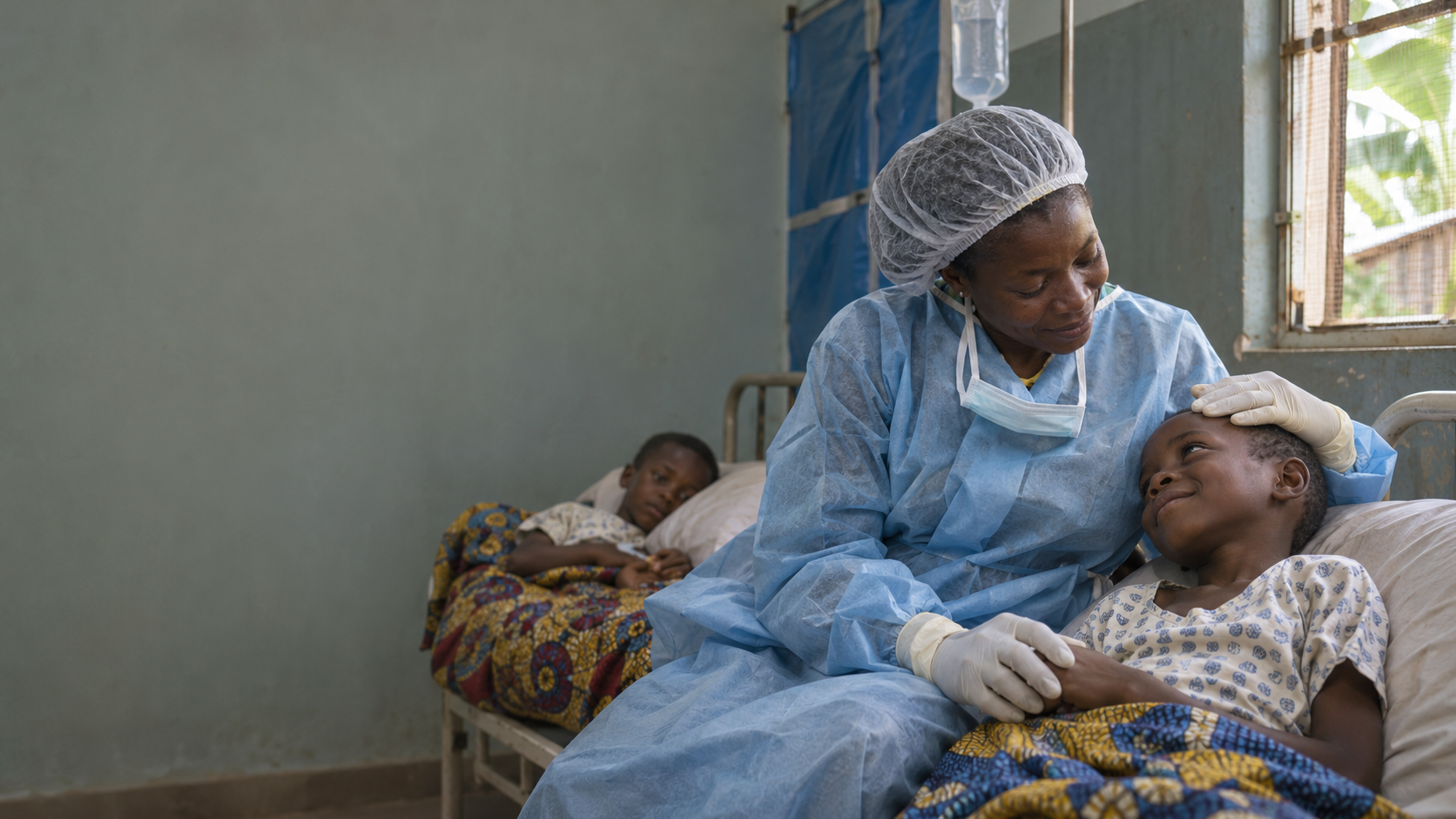 Ebola Survivors Comfort Children in Congo Wards
-
 Cannabis and Cardiovascular Risk: What Evidence Shows