FAA Expects US Flight Schedule Recovery by Sunday
FAA Expects US Flight Schedule Recovery by Sunday
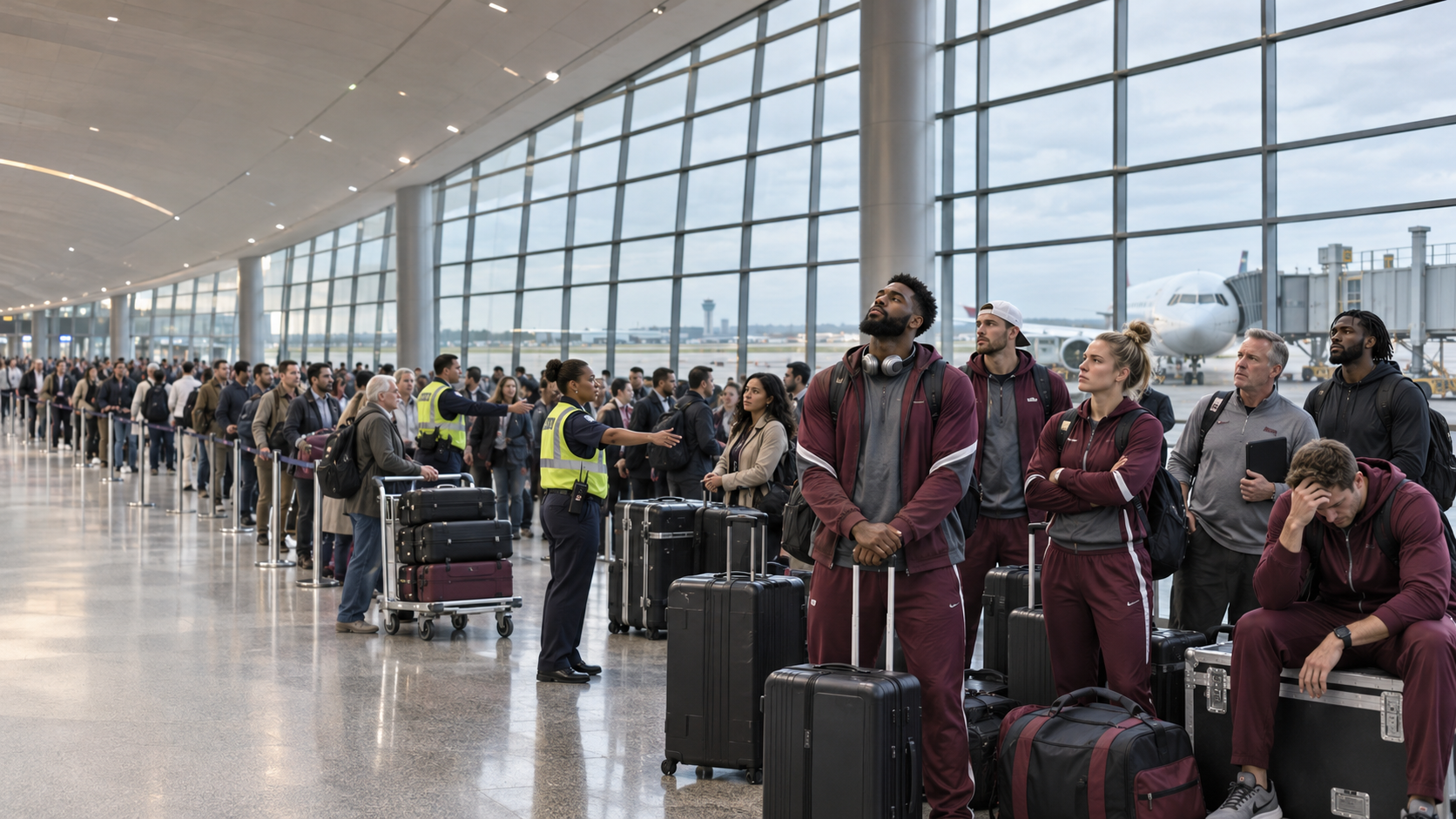
The US air travel schedule is expected to recover from a nationwide ground stop by the end of Sunday, November 15, 2026, according to the Federal Aviation Administration (FAA). The forecast offers relief to travelers facing widespread delays, cancellations, missed connections, and crowded airports. However, the end of the ground stop does not mean every flight will immediately return to its published schedule. Source 7
Airlines and airports must still clear the operational backlog created by the disruption. Aircraft may be at the wrong airports, crews may require reassignment, passengers may need rebooking, and gates and baggage systems may remain congested. These effects can continue for hours after the FAA lifts the ground stop.
The nationwide disruption continued into the weekend after the stoppage affected air travel across the United States. Travelers should treat Sunday’s forecast as a systemwide recovery expectation, not a guarantee that every itinerary will operate on time. Source 5
What the FAA Recovery Forecast Means
A ground stop temporarily restricts or pauses departures to manage safety, traffic volume, or system capacity. Aircraft that would normally depart may remain at the gate while authorities control traffic entering affected airspace or airports.
The FAA expects US air travel to recover from the ground stop by the end of Sunday. Once the restriction ends, airlines can resume more normal departure operations. The published schedule may still take longer to stabilize because the ground stop does not automatically restore aircraft, crews, gates, and passengers to their planned positions.
A flight may remain delayed because its aircraft arrived late from another city. A crew may be unavailable because of duty-time limits, or a passenger may miss a connection even though the connecting flight operates.
Why Recovery May Take Several Hours
The US aviation network operates as an interconnected system. A disruption at a major airport can spread across domestic routes as aircraft and crews move between cities. An early delay can become a series of later delays when the same aircraft is scheduled for multiple flights.
During recovery, airlines may need to:
- Reassign aircraft to routes without their planned equipment.
- Reposition flight crews.
- Rebook passengers who missed connections.
- Confirm gates and ground-handling services.
- Coordinate baggage transfers.
- Update departure and arrival times.
- Cancel flights that cannot be operated safely or efficiently.
Airlines may consolidate flights during recovery. Operating fewer flights can help carriers use available aircraft and crews more reliably, although it may create additional short-term cancellations.
The FAA’s forecast describes the expected condition of the national system. It does not determine the status of an individual passenger’s flight.
Recovery May Vary by Airport and Airline
Local congestion, weather, crew availability, aircraft locations, gate capacity, and airline network design can produce different recovery times.
An airport with fewer affected flights may resume normal departures quickly. A major hub with a large connecting operation may need more time to process delayed passengers, aircraft, and baggage. Airlines with extensive hub networks may also recover differently from carriers operating fewer routes.
Minneapolis–Saint Paul International Airport, known as MSP, was reported to be resuming operations after the nationwide grounding, although the duration of the remaining disruption was uncertain. The situation illustrates how airport operations can restart while passengers continue to face delays and schedule changes. It should not be treated as a forecast for every airport. Source 3
What Caused the Disruption?
Transportation Secretary Duffy attributed the disruption to aging aviation technology, according to reporting on the recovery effort. Aging technology can increase the risk of system slowdowns, communication problems, limited processing capacity, and operational bottlenecks. Source 1
The available reporting identifies aging technology as an explanation but does not provide a complete technical incident report. It does not establish which specific system failed, the precise mechanism behind the ground stop, or whether one technical problem was solely responsible. Additional information from the FAA and the Transportation Department is needed to confirm the full root cause.
A ground stop differs from a ground delay program, flight cancellation, airport closure, air traffic control restriction, and weather delay. It is an operational control measure, not necessarily a permanent airport shutdown.
How Airlines and Airports Are Responding
Airlines are expected to resume departures where permitted, prioritize aircraft and crew movements, and rebook affected passengers. When a carrier cannot operate its full schedule, it may cancel selected flights rather than create further network-wide delays.
Airports must manage gate availability, baggage delivery, security lines, passenger queues, aircraft sequencing, ground transportation, and terminal changes. An airport can resume regular operations while passengers continue to experience delays, late gate assignments, delayed baggage, or missed connections.
Airline recovery times differ according to hub locations, fleet size, aircraft availability, crew positioning, affected routes, passenger rebooking capacity, and dependence on particular airports. The operating airline remains the best source for information about an individual reservation.
What Travelers Should Expect Through Sunday
Flight information may change repeatedly as airlines reassign aircraft, crews, and gates. A flight listed as “on time” may later be delayed or canceled. Travelers should check their status before leaving for the airport and continue monitoring it during the journey.
Useful sources include:
- The airline’s mobile app.
- Airline text and email alerts.
- The airline’s website.
- The airport’s website.
- Official FAA updates.
- Airport display boards.
The airline’s official reservation record should be the main source for flight-specific changes. Third-party booking websites may not update as quickly.
Residual effects may include rolling delays, cancellations, missed connections, overnight schedule changes, and baggage delivery problems. Connecting passengers face additional risk because a delay on the first flight can make the second flight impossible to catch.
Contact the airline as soon as a connection appears at risk. Ask about the next available flight, partner-airline options, standby availability, overnight accommodation policies, and baggage arrangements. Do not assume checked baggage will automatically follow a new itinerary.
What to Do if a Flight Is Delayed or Canceled
Check the operating airline’s app, website, email, or text alerts. Save confirmation numbers, rebooking messages, receipts, and screenshots of cancellation or delay notices.
Compare rebooking options before accepting an itinerary. Consider connection length, airport changes, arrival time, and baggage arrangements. Do not cancel a reservation or buy a replacement ticket without understanding the airline’s policy, because a new ticket may not be reimbursed automatically.
Allow extra time for check-in, security, baggage processing, and gate changes. Keep medications, identification, chargers, important documents, and essential personal items in carry-on luggage.
Refund eligibility can depend on whether the airline canceled the flight, whether the delay was significant, or whether the passenger voluntarily changed the itinerary. Do not assume that every delay creates an automatic right to compensation, a hotel, meals, or a cash refund.
How Monday Travel Could Be Affected
Sunday’s recovery may not eliminate every effect before Monday. Aircraft may remain at the wrong airports, crews may face duty-time limits, passengers may still await rebooking, and baggage systems may need additional time to clear delayed items.
Travelers flying Monday should check their itinerary on Sunday night and again before leaving for the airport. Confirm the departure time, terminal, gate, seat assignment, connection time, checked-bag arrangements, and any airline rebooking message.
What Remains Unclear
The available reporting does not establish how long residual disruptions will last at every airport or how many flights and passengers were affected. The FAA’s systemwide forecast cannot determine the recovery time for each airline, airport, route, or passenger.
Unanswered questions include:
- Which airports will recover last?
- How many flights will remain canceled?
- Will Monday operations be affected?
- How quickly will baggage backlogs clear?
- What technical measures will authorities take?
- Will airlines publish further schedule reductions?
Further information from the FAA, the Transportation Department, airlines, and airport authorities is needed to clarify the cause, response, and long-term prevention measures.
Key Takeaways
- The FAA expects the US air travel schedule to recover from the nationwide ground stop by the end of Sunday, November 15, 2026.
- The end of the ground stop does not guarantee that every flight will operate on time.
- Airlines may continue managing delayed aircraft, crews, passengers, and baggage.
- Transportation Secretary Duffy attributed the disruption to aging technology, but the available reporting does not provide a complete technical explanation.
- Travelers should check directly with their airline before leaving for the airport.
- Recovery conditions may vary substantially by airport and airline.
FAQ
What did the FAA say about US flight recovery?
The FAA said the US air travel schedule should recover from the nationwide ground stop by the end of Sunday, November 15, 2026. Individual flights may still face delays or cancellations while airlines rebuild their schedules. Source 7
Does the end of a ground stop mean flights will immediately return to normal?
No. Airlines may still need to reposition aircraft and crews, rebook passengers, and clear airport congestion.
Why was US air travel disrupted?
Transportation Secretary Duffy attributed the disruption to aging technology. The available sources do not confirm the specific technical failure or provide a complete root-cause analysis. Source 1
What should travelers do if a flight is delayed or canceled?
Check the airline’s official channels, contact the carrier about rebooking, save cancellation notices and receipts, and verify flight status before going to the airport.
Will flight disruptions continue on Monday?
They may. Aircraft, crew, baggage, and passenger backlogs could affect Monday flights even if the systemwide recovery forecast is met on Sunday.
Which source should travelers trust for the latest flight information?
Use the airline for flight-specific information and the FAA or airport authority for broader operational updates.
Artikel Terkait
-
 Nvidia Controversy Tests Trump After Democratic Gains
-
 MAGA Pressure Grows on Howard Lutnick Over Nvidia Dispute
-
 Microsoft Restores Services After Global Outage
-
 FAA Ground Stop Disrupts Sports Travel and Flights
-
 Jensen Huang Ouster: A Governance Lesson for Tech
-
 Bessent Accuses Lutnick Over Nvidia Chip Controls