DR Congo Ebola Outbreak: More Than 5,000 Deaths Reported
DR Congo Ebola Outbreak: More Than 5,000 Deaths Reported
Reports attributed to the BBC and Sky News say that more than 5,000 people died during the Democratic Republic of the Congo’s deadliest Ebola outbreak Source 1 Source 3.
The reported toll indicates a severe public-health crisis. Ebola can cause life-threatening illness, overwhelm health facilities and expose healthcare workers, caregivers and burial teams to infection. Controlling transmission requires rapid diagnosis, isolation, contact tracing, vaccination where appropriate, safe burials and sustained cooperation with affected communities.
Verification note: The supplied summaries attribute the figure of more than 5,000 deaths to the BBC and Sky News. Their original publication dates and the current official totals should be verified before publication. Ebola figures may change as suspected, probable and confirmed cases are reviewed.
The reported scale of the outbreak
The BBC and Sky News summaries describe more than 5,000 deaths in the Democratic Republic of the Congo (DR Congo). That figure must be linked to the reports’ original dates and definitions. Outbreak totals may include confirmed, probable and suspected cases, and authorities may revise them after laboratory testing, record reviews or investigations of deaths.
Public-health agencies generally distinguish among:
- Confirmed deaths: Deaths linked to laboratory-confirmed Ebola infection.
- Probable deaths: Deaths meeting defined clinical or epidemiological criteria without laboratory confirmation.
- Suspected deaths: Reports requiring further investigation or testing.
A final article should compare the media reports with dated situation reports from the World Health Organization and DR Congo’s health authorities World Health Organization.
An Africanews summary separately reported more than 10,000 Ebola cases across Africa, with most occurring in DR Congo Source 7. The supplied summary is dated October 28, 2026 and therefore requires independent verification. It may refer to a later reporting period, a different outbreak or a regional total combining multiple locations or periods.
These figures should not be treated as one contemporaneous dataset unless their dates, geographic scope and case definitions match.
Why Ebola outbreaks are difficult to control in DR Congo
Conflict and insecurity
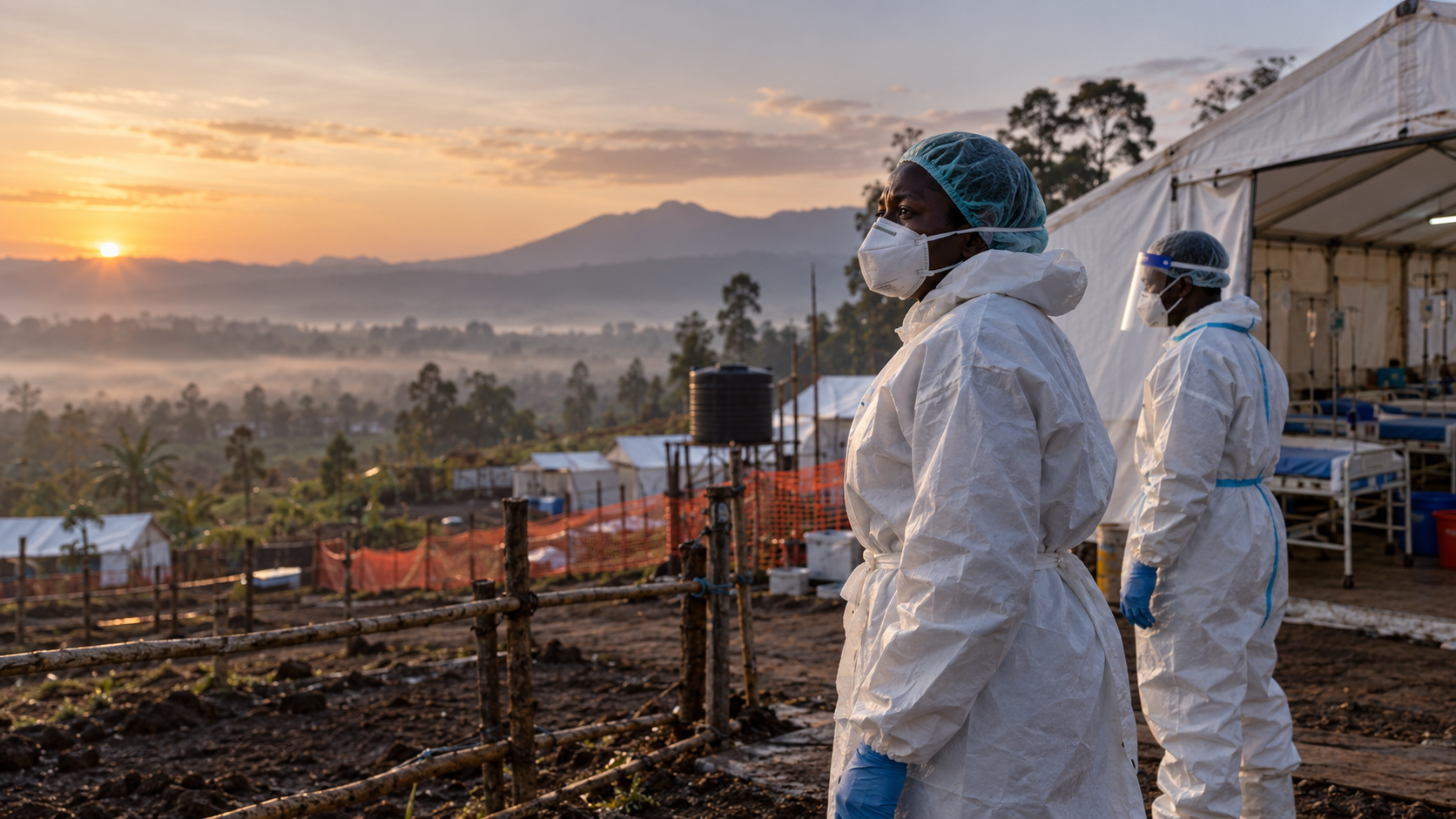
Armed conflict can disrupt contact tracing, vaccination, laboratory transport, ambulance services and treatment-center operations. Response workers may be unable to reach patients or monitor contacts safely.
Insecurity can also displace families and interrupt health records. People moving between communities may be difficult to monitor, while cross-border travel adds pressure to surveillance systems.
Mistrust and community resistance
Ebola control depends on cooperation. People must be willing to report symptoms, accept testing, share information about contacts and permit safe and dignified burials.
Rumors and fear can spread when treatment procedures are poorly explained. Communities may distrust authorities because of previous violence, political exclusion or inadequate public services. Effective communication should involve local leaders, religious representatives, survivors, community health workers and families. Messages should use local languages, address specific concerns and explain what patients can expect inside treatment facilities.
Geography and infrastructure
DR Congo’s remote areas may have difficult roads, limited communications and uneven access to medical care. These conditions can delay diagnosis and increase the time an infected person may expose others.
Response teams also require functioning laboratories, reliable transport, trained staff, protective equipment and systems for storing and distributing vaccines. A failure in any of these areas can slow containment.
How Ebola spreads
Ebola spreads mainly through direct contact with the blood or bodily fluids of an infected person or someone who has died from the disease. Transmission can occur during caregiving, medical treatment or unsafe burial practices Centers for Disease Control and Prevention.
Ebola is not generally transmitted through casual contact in the same way as airborne respiratory diseases. Risk increases during close physical contact with patients, especially during advanced illness or after death.
Common symptoms may include:
- Fever
- Severe weakness
- Muscle pain
- Headache
- Sore throat
- Vomiting
- Diarrhea
- Unexplained bleeding in some cases
Early symptoms can resemble malaria, typhoid fever and other illnesses. Symptoms alone cannot confirm Ebola. Anyone with a possible exposure should contact local health authorities or medical services rather than attempting self-diagnosis.
Treatment and prevention
Ebola can be fatal, particularly when diagnosis and supportive care are delayed. Treatment may include fluids, electrolyte replacement, oxygen, blood-pressure support, treatment for secondary infections and monitoring for organ complications.
Approved vaccines and therapeutics can reduce risk in appropriate outbreak settings. Their use depends on the virus species, regulatory authorization, supply, timing and public-health protocols. Current guidance should come from the World Health Organization, national health authorities or another recognized public-health agency.
Vaccination
Vaccination may protect confirmed contacts, contacts of contacts, healthcare workers and other frontline responders. Ring vaccination focuses on people linked to a confirmed case and the surrounding response network.
Campaigns must reach remote communities, maintain required storage conditions, obtain informed consent and explain the benefits and limitations of vaccination. Public trust is as important as vaccine supply.
Contact tracing and isolation
Contact tracing generally involves:
- Identifying a confirmed or probable case.
- Listing recent contacts.
- Monitoring those contacts for symptoms.
- Testing and isolating people who become ill.
- Investigating additional contacts and transmission chains.
Missing one contact can allow transmission to continue unnoticed. Contact tracing requires trained workers, accurate records, safe transport and cooperation from families.
Safe and dignified burials
The bodies of people who die from Ebola may remain infectious. Safe and dignified burial procedures reduce exposure while respecting families and religious traditions. Burial teams should explain each step and allow appropriate family participation where possible.
Protecting health workers
Healthcare workers need personal protective equipment, infection-prevention training, vaccination where recommended, supervision and psychological support. Prolonged emergencies create risks of exhaustion, grief and stigma in addition to infection.
The wider human cost
Ebola affects entire communities, not only those who become infected. Families may lose caregivers and income earners. Children may be separated from relatives. Survivors and family members may face stigma, exclusion or difficulty returning to school and work.
Survivor support should include medical follow-up, mental-health services, social reintegration and protection from discrimination. An Ebola response can also draw staff, funding and facilities away from routine healthcare, including maternal services, childhood vaccination, malaria treatment, HIV care, surgery and emergency services.
Regional and international risk
Outbreaks near borders require cooperation among neighboring countries. Measures may include:
- Cross-border information sharing
- Coordinated surveillance
- Preparedness at hospitals and clinics
- Laboratory testing and rapid referral
- Public-health guidance for travelers
- Support for border communities
International spread is possible but not inevitable. Risk depends on the outbreak’s location and size, travel patterns, surveillance quality and response speed. Claims that Ebola has reached a specific country require current, independent evidence.
A supplied Guardian summary, dated October 28, 2026, claims that an outbreak could reach the United Kingdom Source 5. This future-dated claim should not be used without confirming the original article, date and factual context.
How to interpret Ebola statistics
Ebola totals may change when laboratory results become available, suspected cases are reclassified, duplicate records are removed, deaths are investigated retrospectively, previously inaccessible areas report cases or national and regional databases are reconciled.
Readers should check:
- The reporting date
- The geographic scope
- The case definition
- The agency responsible for the figures
- Whether confirmed, probable and suspected cases are combined
The supplied media summaries support the claim that the BBC and Sky News reported more than 5,000 deaths. The Africanews summary supports the separate claim of more than 10,000 reported cases across Africa. The remaining supplied entries contain no usable evidence and should not support outbreak statistics.
Conclusion
The supplied BBC and Sky News summaries describe more than 5,000 deaths in DR Congo’s deadliest Ebola outbreak. The reported scale highlights the consequences of insecurity, mistrust, difficult geography, delayed detection and pressure on health systems.
Vaccination, treatment, contact tracing, infection prevention and safe burials can reduce transmission. These measures work best with community trust, local leadership, secure access and sustained investment.
Because Ebola data can change, readers should consult current updates from the World Health Organization, national health authorities and recognized public-health agencies before relying on any reported total.
Frequently asked questions
How many people died in DR Congo’s deadliest Ebola outbreak?
The supplied BBC and Sky News summaries say more than 5,000 people died. The exact figure requires a reporting date and confirmation against official situation reports.
How many Ebola cases were reported in Africa?
The supplied Africanews summary says reported Ebola cases in Africa surpassed 10,000, with most occurring in DR Congo. That figure requires verification against the relevant official report.
Why was the outbreak difficult to control?
The response faced insecurity, limited access, logistical barriers, health-system pressure and mistrust. These conditions complicated vaccination, contact tracing, safe burials and early treatment.
How does Ebola spread?
Ebola spreads mainly through direct contact with the blood or bodily fluids of an infected person or someone who has died from the disease. Transmission can occur during caregiving, medical treatment or unsafe burial practices.
Can Ebola be prevented?
Risk can be reduced through early detection, isolation, contact tracing, infection-prevention measures, safe burials and vaccination when an approved vaccine is available for the relevant outbreak.
Is Ebola likely to spread internationally?
International spread is possible but not inevitable. Risk depends on the outbreak’s location and size, travel patterns, surveillance, border measures and response speed. Claims about transmission to a specific country require current, independent verification.
Artikel Terkait
-
 Women’s Heart Health: Rethinking Risk and Symptoms
-
 Menopause Symptoms and Hot Flashes: Updated Guidance
-
 Tula-Tu Fights EEHV Infection as Doctors Remain Hopeful
-
 Ebola Death Toll in DR Congo Surpasses 5,000
-
 Bird Flu Reaches 27 Washington Dairy Herds
-
 Why US Families Are Considering Earlier MMR Vaccination