Data Centers Face a Political Reckoning After 2026
Data Centers Face a Political Reckoning After the 2026 Midterms
Data centers suffered political setbacks in the 2026 midterm elections, according to reporting from The Associated Press. The results signal growing resistance to the rapid expansion of infrastructure supporting cloud computing, artificial intelligence, streaming, online services, and modern business systems. They may also mark the beginning of a broader reckoning for major technology companies. Source 1
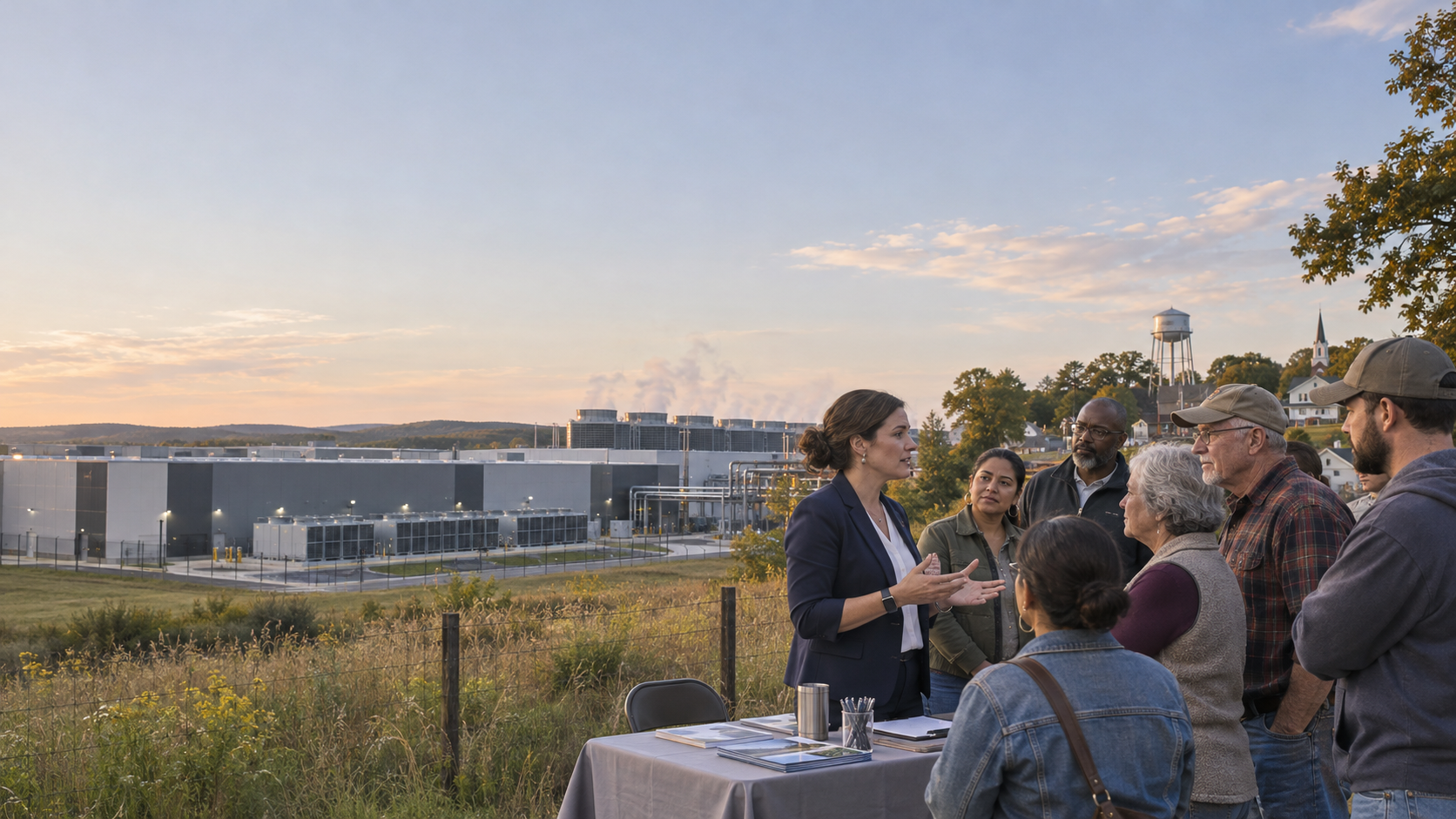
The election results matter beyond individual projects. Data-center development has become a local political issue involving electricity, water, land use, noise, taxes, environmental effects, and public subsidies. Technology companies want to build capacity quickly to meet rising demand, particularly from artificial intelligence. Communities, however, are questioning whether the benefits justify the costs and whether residents have enough influence over projects that can reshape entire regions.
The available reporting identifies setbacks and broader political consequences but does not provide a complete list of affected races, ballot measures, or projects. The results should not be treated as a nationwide rejection of data centers. Instead, they point to a changing political environment in which expansion may require greater transparency, stronger community benefits, and more public oversight.
What Happened in the 2026 Midterm Elections?
The setbacks show that data-center development has become politically contested. The issue is no longer limited to corporate boardrooms, utility planning agencies, or specialized zoning hearings. Voters and local candidates are debating whether large facilities fit their communities and whether proposed economic benefits match the public costs.
County commissions, city councils, planning boards, zoning authorities, mayors, governors, and state legislators can influence project approvals, permitting standards, utility rules, environmental requirements, and tax incentives. Ballot measures can address land use, public subsidies, and infrastructure investment directly.
Opposition does not necessarily mean that voters reject technology, artificial intelligence, or economic growth. Many residents rely on cloud services and digital platforms daily. Their concerns often involve the pace, scale, and terms of expansion. A community may support technology jobs while opposing a particular site, tax package, water plan, or energy arrangement.
The setbacks could produce different outcomes. A project may be rejected, delayed during permitting, approved with additional conditions, or placed under political scrutiny without facing an immediate legal obstacle. A failed local vote may affect one site but not another, while a new official may demand more disclosure without blocking development.
The available reporting does not verify project-by-project results. It supports a broader conclusion: data-center development faces increased political scrutiny and may no longer receive automatic approval when companies promise investment and tax revenue. Source 3
Why Data Centers Have Become a Political Flashpoint
Electricity and Grid Pressure
Data centers require large quantities of reliable electricity. Artificial intelligence has intensified the debate because AI training and inference can require significant computing capacity. Cloud providers and technology companies are seeking new facilities while utilities determine how to connect them without undermining grid reliability.
Residents and regulators want to know who will pay for substations, transmission lines, transformers, and other upgrades. A private company may receive the direct commercial benefit while ratepayers share the cost of expanding the electrical system. Other concerns include higher electricity prices, peak-demand stress, and preferential treatment for industrial users during supply shortages.
The central political question is cost allocation. If data centers create demand for new infrastructure, companies may face growing pressure to fund a larger share of that investment.
Water Use and Environmental Effects
Some data centers use water for cooling, particularly in hot climates. Consumption varies by facility design, weather, cooling technology, computing load, and local regulations. Treating every facility as equally water-intensive would obscure important differences, but ignoring water use can create serious local conflict.
Residents may ask how much water a facility will use annually and during peak periods, whether operations will change during droughts, and how the project could affect municipal supplies, wastewater systems, agriculture, and households.
Closed-loop systems, water recycling, air cooling, and other designs can reduce demand. These approaches do not eliminate environmental effects, but they can make project commitments easier to measure.
Land Use, Noise, and Community Character
Large data centers can transform rural, suburban, or industrial areas. Facilities may occupy hundreds of acres and include massive buildings, security fencing, substations, cooling equipment, backup generators, and extensive construction infrastructure.
Residents commonly raise concerns about construction traffic, road damage, generator noise, continuous cooling sounds, light pollution, and the loss of farmland or open space. Communities may seek noise limits, monitoring systems, sound barriers, and enforceable rules for backup generators and air quality.
Tax Incentives and Public Subsidies
Governments often use tax abatements, grants, discounted infrastructure, or other incentives to attract data-center investment. Supporters cite construction work, property-tax revenue, and investment in roads, substations, fiber networks, and industrial sites.
Critics question whether the public receives a fair return. Data centers can require major infrastructure investments while creating relatively few permanent jobs compared with their physical size. Residents want to know how many jobs a facility will create, how much revenue it will generate, how long incentives will last, and what happens if the company misses its commitments.
The Economic Case for Data Centers
Projects can generate construction spending, demand for contractors and suppliers, property-tax revenue, and investment in local infrastructure. However, ownership structures, tax agreements, labor markets, and infrastructure costs determine whether benefits are broad or limited.
Construction employment may be substantial but temporary. Permanent staffing can be much smaller once a facility becomes operational. Officials should therefore evaluate construction jobs, long-term jobs, wages, local hiring, and indirect employment separately.
Data centers support cloud services, AI applications, online platforms, streaming, financial systems, government services, and business software. Governments may view them as strategic infrastructure, but national benefits do not automatically resolve local questions about electricity, water, land, noise, and taxes.
Job claims can become politically vulnerable when permanent employment is limited relative to a project’s size. Companies can strengthen their case by publishing credible projections and specifying qualifications, wages, hiring timelines, apprenticeships, and workforce-training commitments.
What the Setbacks Mean for Technology Companies
Faster Expansion May No Longer Be the Default
Political resistance can disrupt rapid expansion through longer permitting timelines, public hearings, environmental reviews, zoning challenges, litigation, and new disclosure requirements. Delays increase construction costs and complicate capacity planning.
The election results suggest that speed alone may no longer determine project success. Developers will need political strategies alongside engineering, financing, and procurement plans.
Greater Accountability
Future scrutiny is likely to focus on electricity use, water consumption, backup-generator emissions, noise, construction effects, tax incentives, emergency planning, and cumulative impacts from multiple facilities in one region.
Companies may need to publish clearer, location-specific data. A general commitment to renewable energy or sustainability may not satisfy residents evaluating a particular project. Communities want practical answers about power demand, grid upgrades, water use, and enforcement.
A Shift in Bargaining Power
Local opposition gives communities more leverage. Companies may need to negotiate utility-cost agreements, water restrictions, noise limits, renewable-energy commitments, community funds, local hiring targets, and road improvements.
Developers may favor locations with clear rules, available infrastructure, lower water stress, and established industrial zoning. Requirements that vary widely between jurisdictions could nevertheless create additional uncertainty.
The Regulatory Reckoning Ahead
Governments could adopt comprehensive environmental reviews, energy disclosures, water-impact assessments, noise standards, generator regulations, facility-size limits, and cumulative-impact analysis for data-center clusters.
Potential energy requirements could include funding for grid upgrades, contracts for new generation, demand forecasts, renewable-energy commitments, battery storage, and temporary curtailment of nonessential computing during emergencies. Officials should distinguish between purchasing renewable-energy credits and adding local generation capacity.
Election pressure may also lead governments to require public disclosure of incentive packages, sunset clauses, job-creation benchmarks, clawbacks, independent cost-benefit analyses, and community approval processes. The supplied reporting does not identify specific regulatory proposals. Any new rules will depend on state utility policy, local authority, environmental law, and responses to individual projects.
How Technology Companies Could Respond
Engage Communities Early
Engagement should begin before a zoning application is filed. Companies can meet with residents, officials, utilities, environmental organizations, labor groups, and nearby businesses during site selection.
Effective engagement requires plain-language documents, accessible public meetings, independent technical reviews, clear answers about electricity and water, and regular construction updates. Early disclosure of difficult facts can build more credibility than optimistic economic claims.
Offer Measurable Benefits
Voluntary commitments should include deadlines, reporting, and enforcement mechanisms. Possible benefits include local hiring, workforce training, utility funding, water-efficiency targets, noise monitoring, property-tax guarantees, and community investment funds.
Community-benefit agreements are stronger when residents can verify performance and seek remedies for noncompliance. Vague promises create political vulnerability; measurable commitments create accountability.
Build Efficient Facilities
Closed-loop cooling, air cooling where appropriate, water recycling, heat recovery, battery storage, on-site renewable generation, and lower-noise equipment can reduce opposition. No technology eliminates environmental impacts, so companies should provide independent verification rather than relying on unsupported technical claims.
Reconsider Location and Scale
Developers should evaluate existing industrial sites, brownfields, areas with available grid capacity, regions with lower water stress, and locations near fiber and transportation infrastructure. Smaller or distributed facilities may reduce local impacts, although they can create different economic and operational trade-offs.
Questions for Voters and Local Officials
Energy
- What is the facility’s expected peak electricity demand?
- Who pays for transmission lines, substations, and other grid upgrades?
- Could the project increase electricity rates?
- What happens during grid emergencies?
- Does the company have a credible power-supply plan?
Water and the Environment
- How much water will the facility use annually and during peak periods?
- Which cooling system will it operate?
- Will water use change during droughts?
- What emissions will backup generators produce?
- Has the project’s cumulative impact been assessed?
Economic Benefits
- How many permanent jobs will the facility create?
- What wages and qualifications will those jobs require?
- How much tax revenue will the community receive?
- What incentives are being offered?
- What penalties apply if the company misses its commitments?
Transparency and Oversight
- Who owns and operates the facility?
- Are project documents publicly available?
- Can residents access electricity, water, and emissions data?
- Which agency enforces project conditions?
- How can the public challenge noncompliance?
Temporary Setback or Long-Term Shift?
Opposition could continue as AI and cloud-computing demand drives companies to seek new capacity. Residents are also more familiar with the local consequences of large infrastructure projects. Electricity and water constraints can intensify competition between industrial users and households, while election results may encourage additional candidates and advocacy groups to challenge projects.
Development will continue in many regions. Data centers provide investment and tax revenue, and some governments actively compete for technology infrastructure. Companies can adapt through more efficient designs, stronger community agreements, and improved transparency. State and federal policymakers may support expansion for economic, technological, or national-security reasons.
The most likely outcome is more negotiation rather than an immediate halt. Data-center expansion is unlikely to stop, but its political terms may change. Projects may require stronger evidence of public benefit, clearer environmental data, more infrastructure funding, and greater community control over location, scale, and operating conditions.
Conclusion
The 2026 midterm setbacks show that data-center expansion has become a major political issue. The available AP reporting describes growing resistance and the possibility of increased scrutiny for technology companies. Source 1
The central questions are becoming harder for technology companies to avoid: Who pays for infrastructure? Who receives the economic benefits? Who bears environmental costs? How much information must companies disclose? What happens when promised jobs or tax revenue fail to appear?
The companies most likely to succeed will treat data centers as community infrastructure rather than purely private assets. Available electricity and land remain essential, but political legitimacy and local trust may become equally important. The next phase of data-center growth will depend not only on computing demand, but also on whether communities believe expansion serves the public interest.
Frequently Asked Questions
Why did data centers face setbacks in the 2026 midterm elections?
The supplied reporting describes setbacks and growing political resistance. Concerns involve electricity demand, water use, land use, environmental effects, tax incentives, infrastructure costs, and whether communities receive enough economic benefit.
Do the election results mean data centers will stop being built?
No. The results indicate greater scrutiny and possible delays, not an immediate end to development. Projects may continue in locations with available infrastructure, supportive governments, clear regulations, and stronger community agreements.
Why are data centers controversial?
Data centers can require substantial electricity, land, and sometimes water. Residents may also question construction traffic, noise, backup-generator emissions, tax incentives, infrastructure costs, and the number of permanent jobs created.
How could technology companies respond to political opposition?
Companies can improve early community engagement, disclose project impacts, fund necessary infrastructure, offer measurable local benefits, use efficient cooling systems, and accept stronger oversight and reporting requirements.
Will data-center regulations become stricter?
They may. Possible changes include expanded environmental reviews, energy and water disclosures, noise and emissions limits, stricter tax-incentive conditions, and requirements to fund grid or utility upgrades.
What should communities evaluate before approving a data center?
Communities should review projected electricity and water use, infrastructure costs, permanent employment, tax revenue, incentive agreements, environmental effects, emergency plans, enforcement mechanisms, and the company’s obligations if promised benefits are not delivered.
Artikel Terkait
-
 Nasdaq Futures Rebound After Asian Tech Sell-Off
-
 Nasdaq Plunge: What the Data-Center Crash Means
-
 Asian Chip Stocks Slide as Nasdaq Sell-Off Hits AI Trade
-
 2027 Federal Tax Brackets: Rates and How to Find Yours
-
 OpenAI’s Data Center PR Campaign Faces Trust Test
-
 Starbucks Fans Want a Missing Holiday Drink Back