Bears Rout Seahawks 34–17 Behind Williams and Simmons
Bears Rout Seahawks 34–17 Behind Williams and Simmons
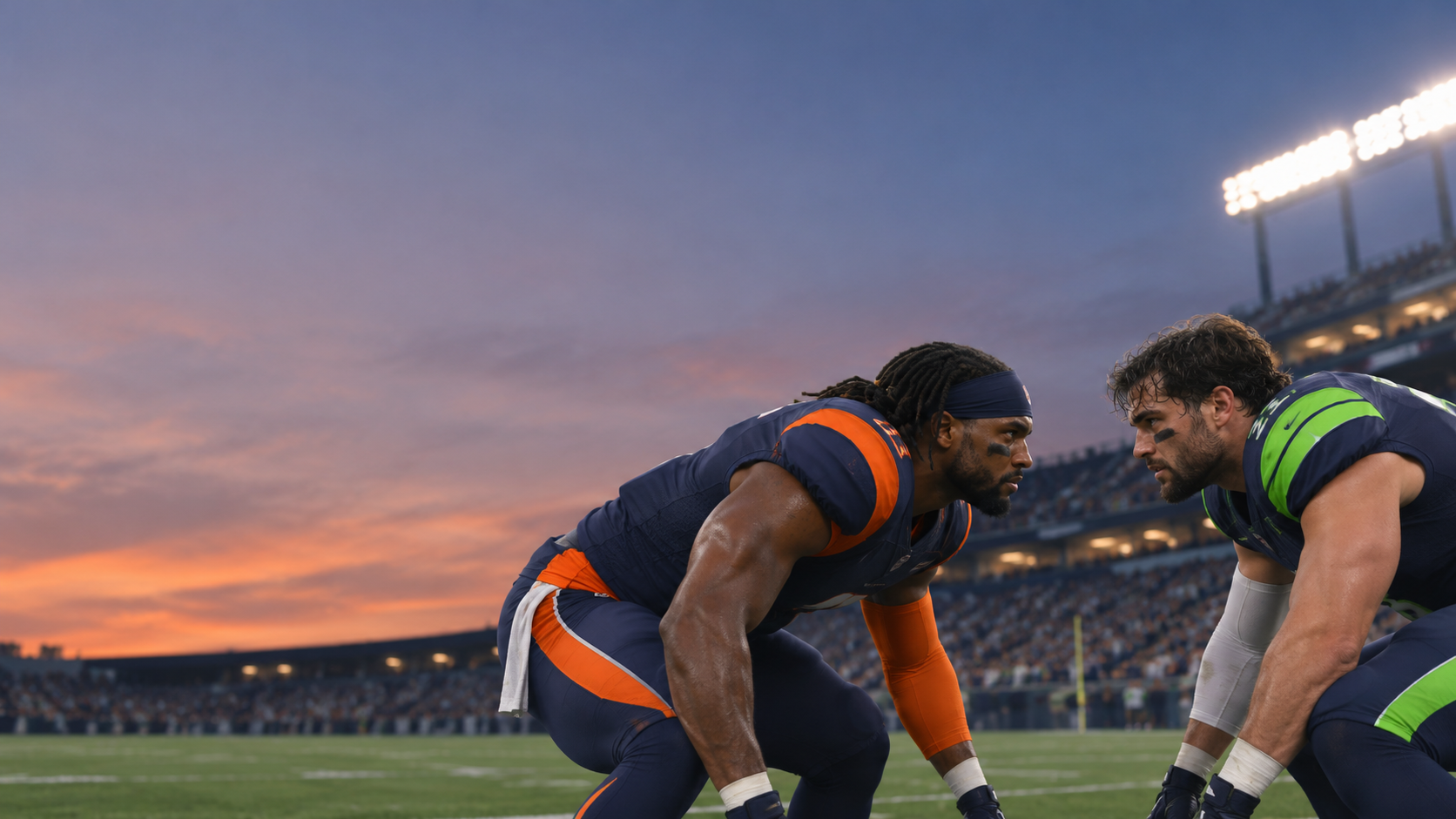
The Chicago Bears defeated the Seattle Seahawks 34–17 on Monday Night Football, earning a decisive 17-point victory behind quarterback Caleb Williams and defensive lineman Jeffery Simmons.
Williams led an offense that produced 34 points, while Simmons made an immediate impression in his Chicago debut. Together, their performances helped the Bears deliver a strong statement under the national spotlight. Source 1
Bears Defeat Seahawks 34–17
Chicago’s victory was not a narrow escape. The Bears created a 17-point margin and maintained enough control to turn the game into a convincing result. Seattle scored 17 points, but the Seahawks could not sustain enough pressure to match Chicago’s production.
The available game summaries confirm the final score and identify Williams and Simmons as the leading figures. They do not provide a verified scoring sequence, venue, date, possession breakdown or complete box score. Those details should not be inferred from the final result alone. Source 5
Caleb Williams Leads Chicago’s Offense
Williams was central to Chicago’s 34-point performance. As the Bears’ quarterback, he directed the offense and helped convert opportunities into a decisive win.
The supplied reports do not include verified figures for his completions, passing yards, touchdown passes, interceptions or rushing production. The final score confirms that Chicago produced 34 points with Williams leading the offense, but a complete individual evaluation requires an official box score and play-by-play record.
A Strong Performance on a National Stage
Monday Night Football provides a prominent stage for quarterback development. Williams’ leadership in the victory gave Chicago an encouraging result in a nationally televised matchup and created a foundation for confidence.
One game does not resolve every question about Williams or the Bears’ offense. Chicago must continue to protect the football, sustain drives and produce efficiently against different defensive schemes. Williams must show that this performance can become part of a broader trend rather than an isolated high point.
Jeffery Simmons Makes an Immediate Impact
Simmons’ Chicago debut was the other major storyline from Monday night. Reports described the defensive lineman as a key contributor and highlighted his performance as an important part of the Bears’ decisive victory. Source 7
Interior defensive linemen can influence games by collapsing the pocket, occupying blockers, closing running lanes and creating opportunities for teammates. Their value does not depend solely on sacks or other entries in the box score.
The available reports do not provide verified totals for Simmons’ tackles, sacks, quarterback hits, tackles for loss or forced turnovers. Those figures should come from an official gamebook or complete statistical report. The confirmed point is that Simmons made a strong impression in his Bears debut and was identified as one of the players who helped define the rout. Source 3
Simmons’ impact could strengthen Chicago’s defensive identity. Interior disruption can create opportunities for edge rushers, linebackers and defensive backs while limiting the time available to opposing quarterbacks. However, one debut does not establish a full-season trend. The Bears must evaluate his consistency against the run, stronger offensive lines and different protection schemes.
Why Chicago’s Defense Mattered
A 34-point offense still needs defensive stops to create a decisive margin. Seattle scored 17 points, but the Seahawks could not match Chicago’s total or close the gap.
Defensive pressure can affect a game before it produces a sack or turnover. It can force hurried throws, shorten drives and create unfavorable down-and-distance situations. Simmons’ interior presence became part of that broader defensive story.
The supplied reports do not confirm Chicago’s total yards allowed, sacks, takeaways, third-down rate or red-zone stops. Those statistics should not be invented. The verified conclusion is that the Bears limited Seattle to 17 points while producing 34 of their own. Source 9
Key Takeaways
- Chicago created separation: The Bears scored 34 points, twice Seattle’s total, and won by 17.
- Williams directed the offense: His leadership placed him at the center of Chicago’s scoring output.
- Simmons made an immediate impression: His debut became one of the game’s defining storylines.
- Seattle could not sustain a response: The Seahawks did not produce enough offense to challenge Chicago’s lead.
- Consistency remains the next test: The Bears must repeat this level of execution against future opponents.
What the Win Means for Chicago
The Bears gained confidence in two important areas: Williams’ leadership at quarterback and Simmons’ defensive impact. The victory showed Chicago receiving meaningful contributions on both sides of the ball.
The nationally televised setting increased the visibility of the result. It can raise expectations, strengthen confidence and force future opponents to study the team more carefully, but it does not guarantee postseason success.
Chicago must now answer several questions. Can Williams maintain efficient quarterback play? Can Simmons reproduce his debut impact? Can the defense remain effective against stronger rushing attacks? Can the offense perform in close games while limiting turnovers and penalties?
What the Loss Means for Seattle
Seattle must examine how it handled Chicago’s defensive front. Protection, route timing and offensive decision-making become especially important when an opponent can generate interior pressure.
The Seahawks also need greater consistency. Their 17-point total left them well behind Chicago, and they could not prevent the Bears from reaching 34 points. Practical adjustments include improving protection, sustaining longer drives, finishing possessions, limiting explosive plays and creating more pressure against opposing quarterbacks.
The available information does not support assigning responsibility to individual Seattle players without verified statistics or film analysis.
Final Takeaway
The Chicago Bears defeated the Seattle Seahawks 34–17 in a decisive Monday Night Football performance led by Caleb Williams and Jeffery Simmons. Williams directed an offense that produced 34 points, while Simmons made an immediate impact in his Bears debut.
The result reflected complementary football. Chicago generated enough offense to create separation and enough defensive resistance to keep Seattle from closing the gap. One win cannot prove that every issue has been solved, but the 17-point victory gives the Bears momentum, confidence and a clear standard to repeat.
Frequently Asked Questions
What was the final score?
The Chicago Bears defeated the Seattle Seahawks 34–17 on Monday Night Football. Source 1
Who led the Bears?
Caleb Williams led Chicago’s offense, while Jeffery Simmons made a major impact in his Bears debut.
Was this Simmons’ Bears debut?
Yes. The game marked Simmons’ first appearance with Chicago, and his performance was highlighted as a key reason for the decisive victory. Source 7
How did Williams perform?
Williams helped lead Chicago to 34 points and was one of the central figures in the victory. The available summaries do not provide verified passing, rushing or touchdown statistics.
Why was the win significant?
The 34–17 result showed that Chicago could combine effective quarterback play with a disruptive defensive performance.
What should Seattle improve?
Seattle must improve its ability to handle defensive pressure, sustain drives, finish possessions and prevent opponents from creating a decisive scoreboard advantage.